May 2025年5月
Der Rückblick/Flashback/日本:回顧
🔴 It’s Spring in Japan and I find myself enrolled for a Suiboku (Ink Wash Painting) lesson in in Tsurumi, Tokyo…
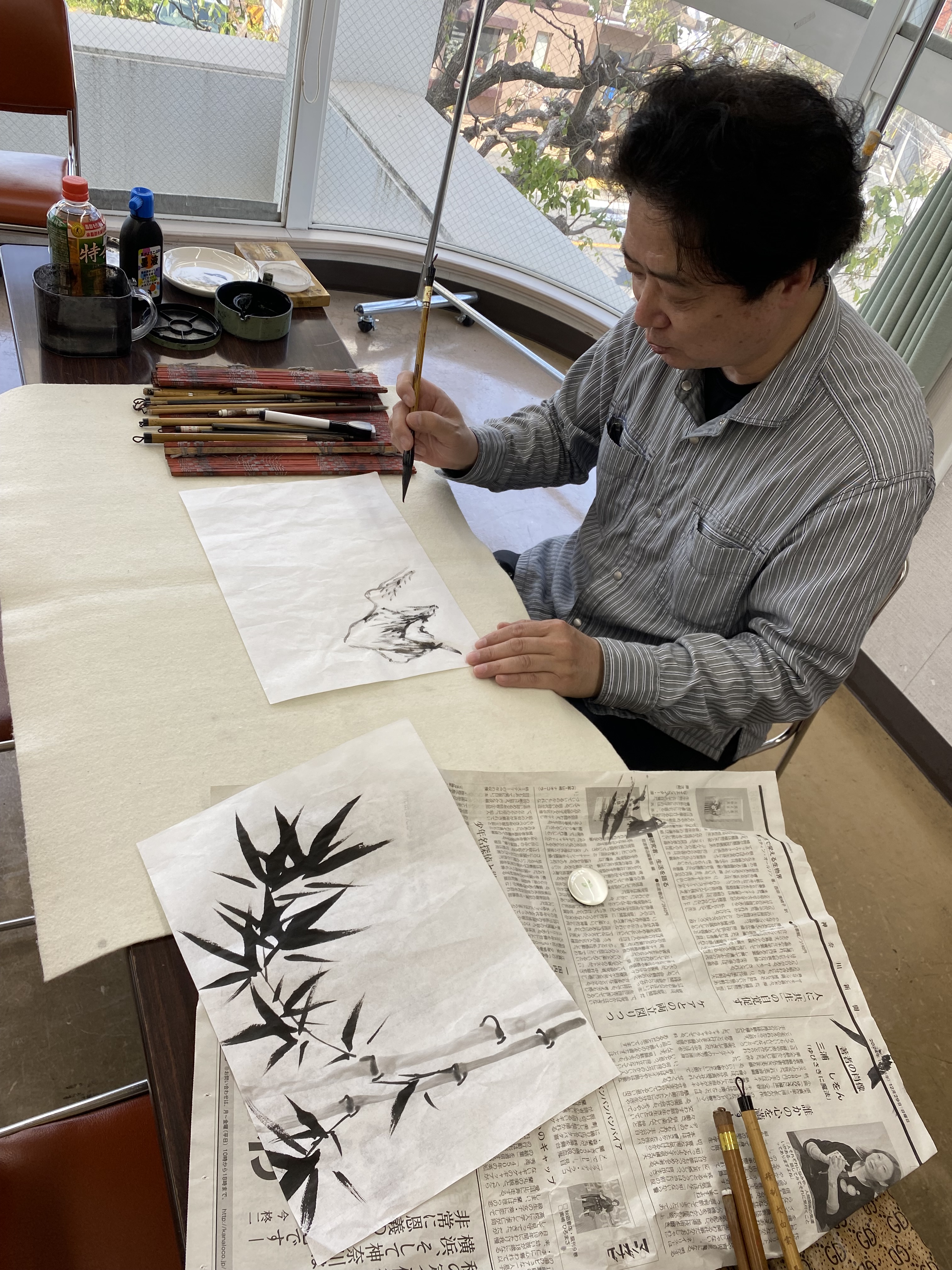
The artist sort of assumed I could speak fluent Japanese, so I probably lost many of the hints he gave. However he was very complimentary about my bamboo drawing….
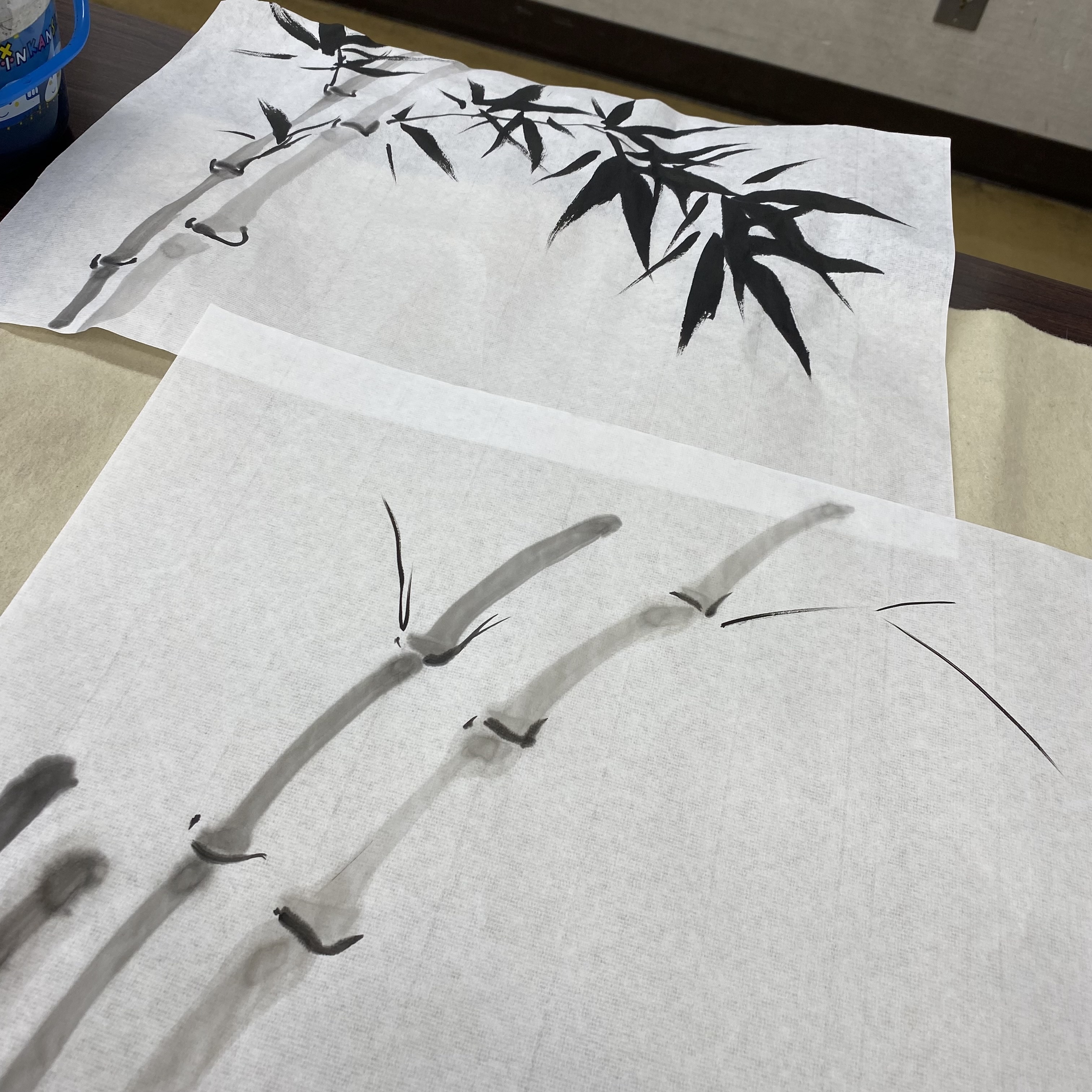
すいぼくが 水墨画 鶴見
That’s his drawing above, which he knocked off in about a minute. I started practising with just the stems, not the leaves…..
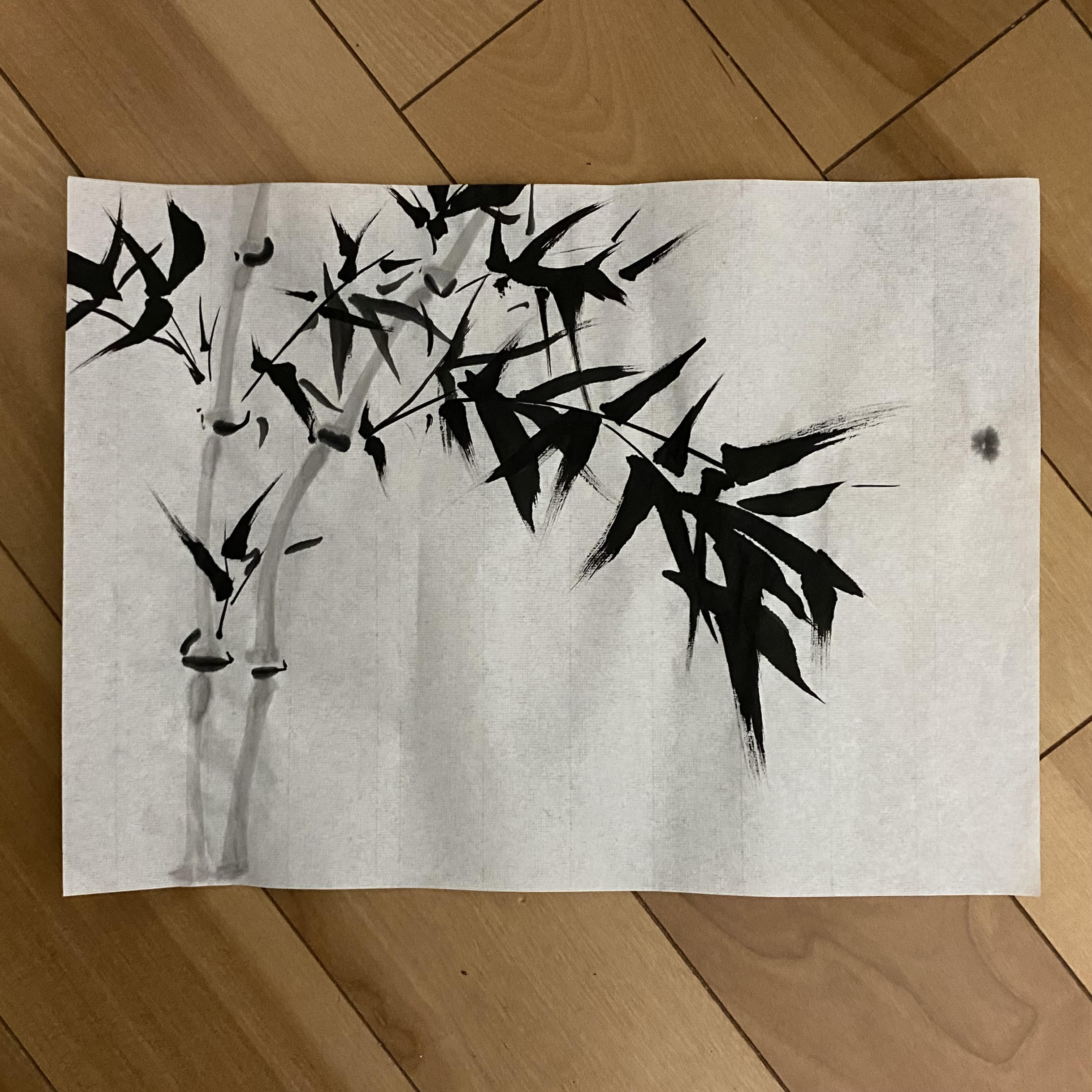
私の最初の試み
With a couple of deft strokes, he “improved” my bamboo. Stuck it up on the whiteboard and photographed it!
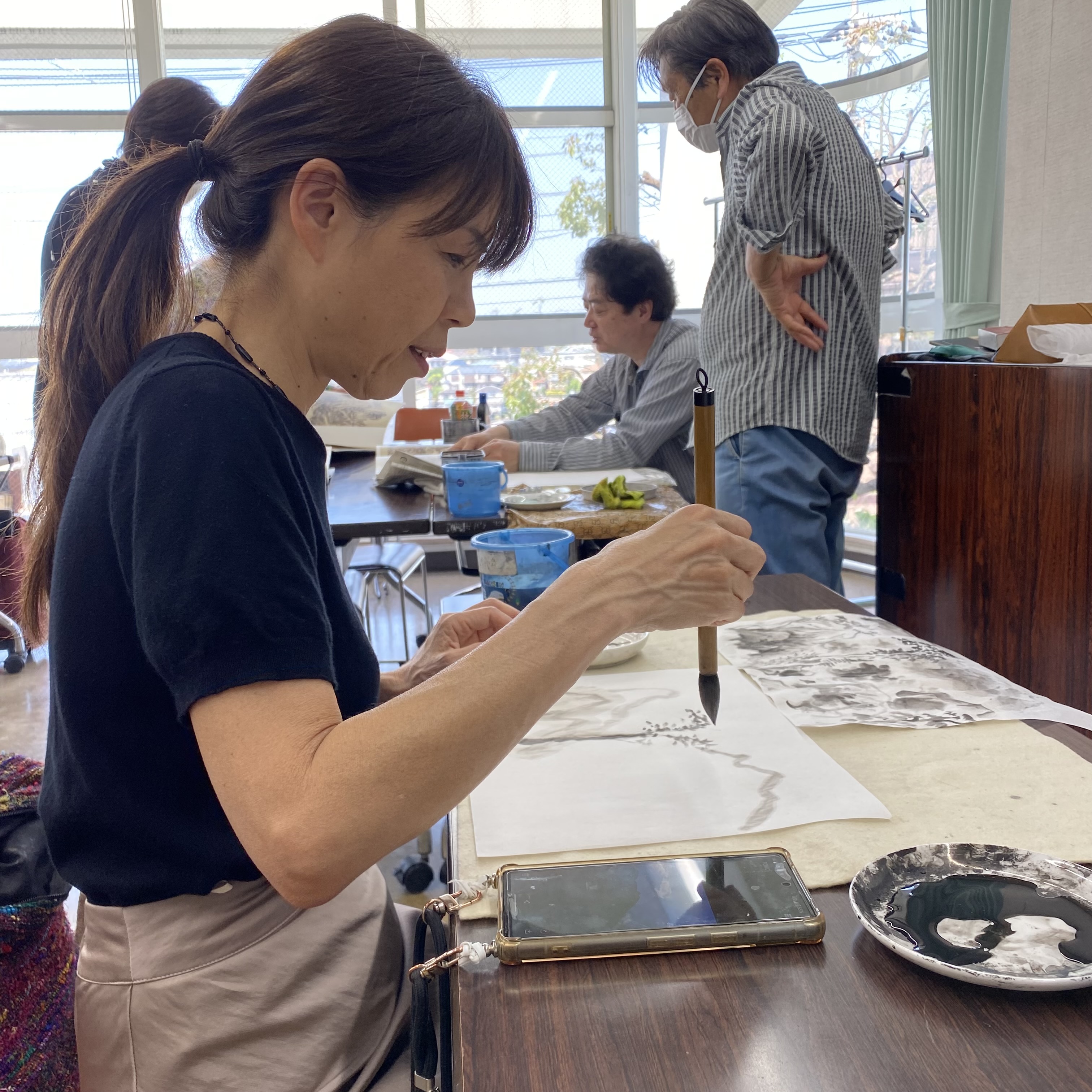
At the desk next to me Tomoko is poised to go….
🔴 soon after that I was in another part of Tokyo. A group of musicians (Aki さん – Cello, Takako さん- Flute, Ayakoさん – Mezzo Soprano) were “transcending boundaries” in their experimental Minorite concert in Koto City. They were not painting, oh no, they were tearing!
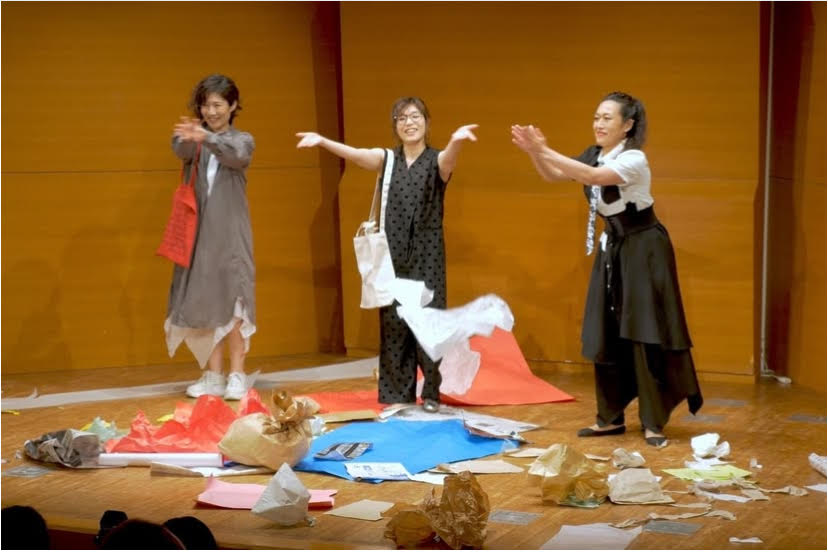
This piece (by Benjamin Patterson) was all about doing just that – with different sorts of paper. I closed my eyes and let my imagination run riot. The audience loved it.
🎵 The contemporary music scene is alive and well in Tokyo.
🔴 Cakes…..
Are always nicely presented here……..This Yokohama cheesecake is made after a recipe from the wife of well-known Yokohama author Osaragi Jiro……
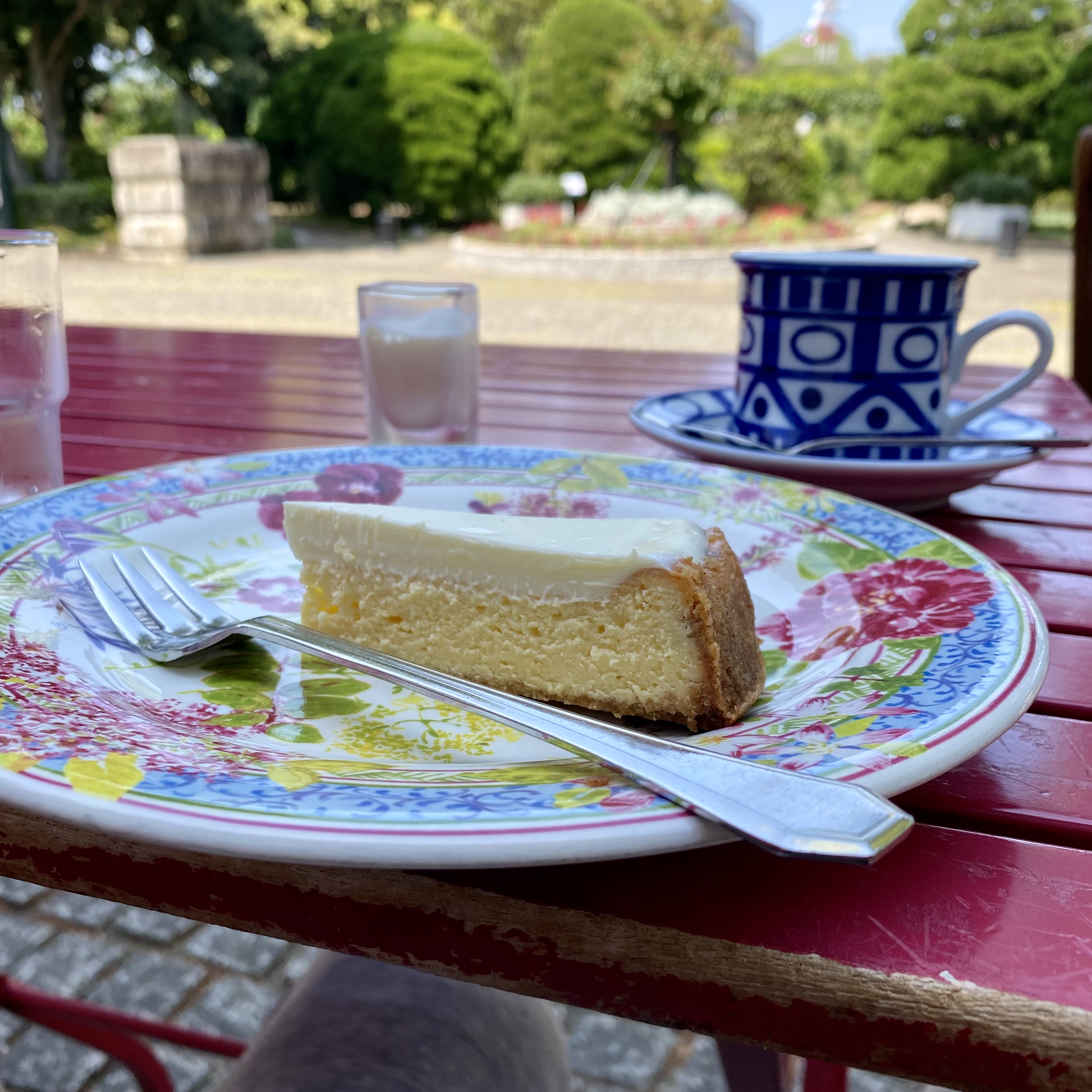
おいしいチーズケーキ
🔴 I love going to the wilder parts of the coast. The sand can be quite dark, due to its volcanic origin. It’s soft underfoot….
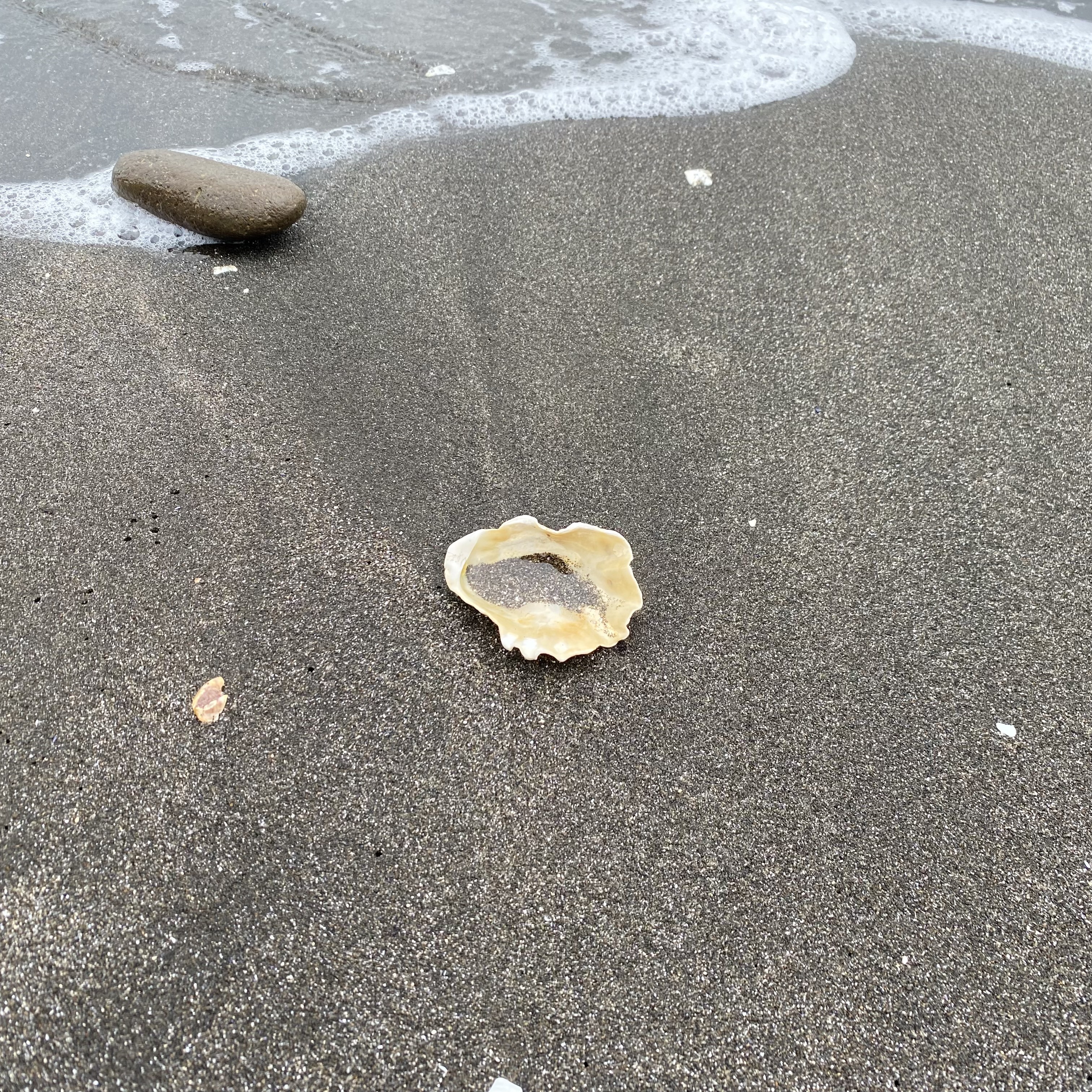
砂は柔らかい
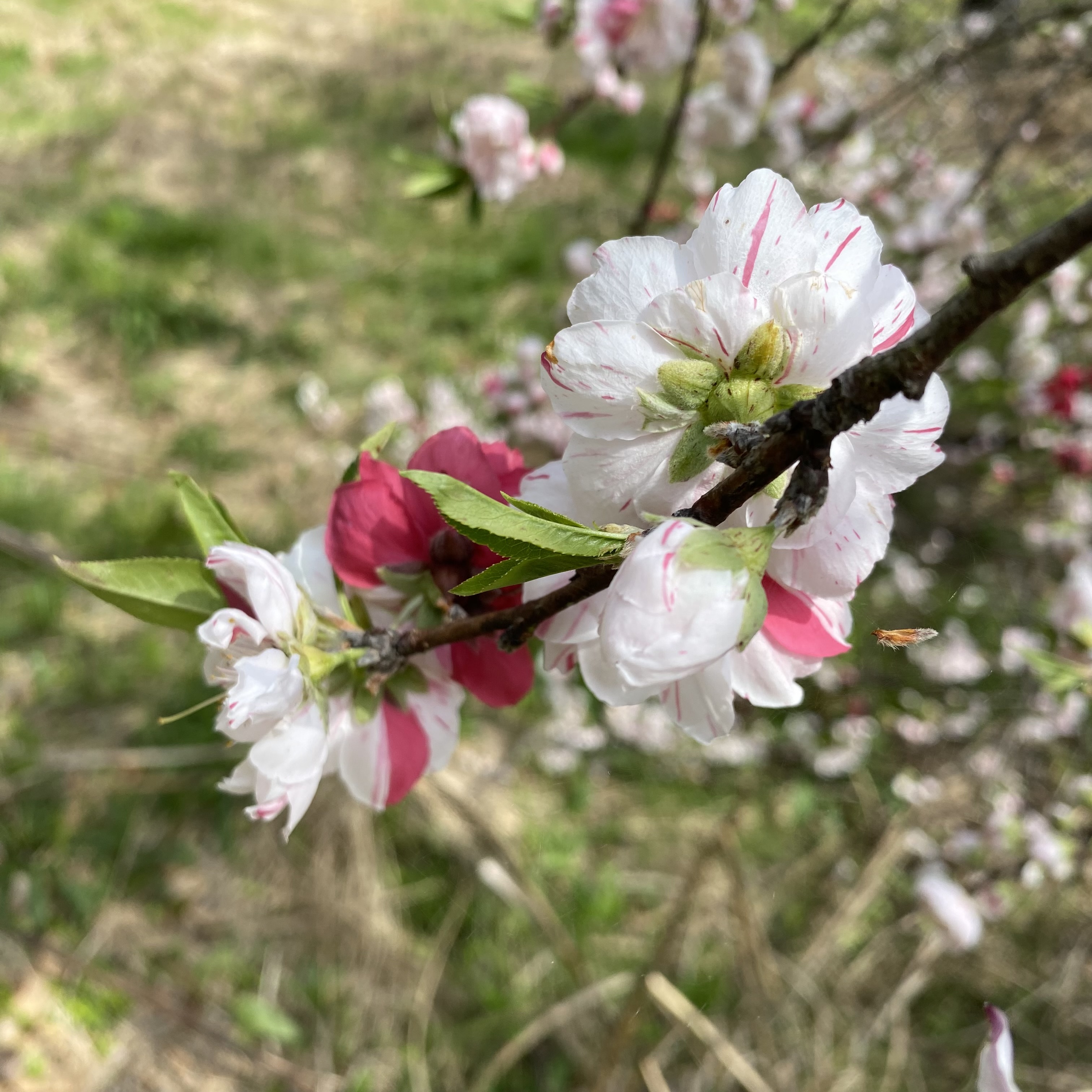
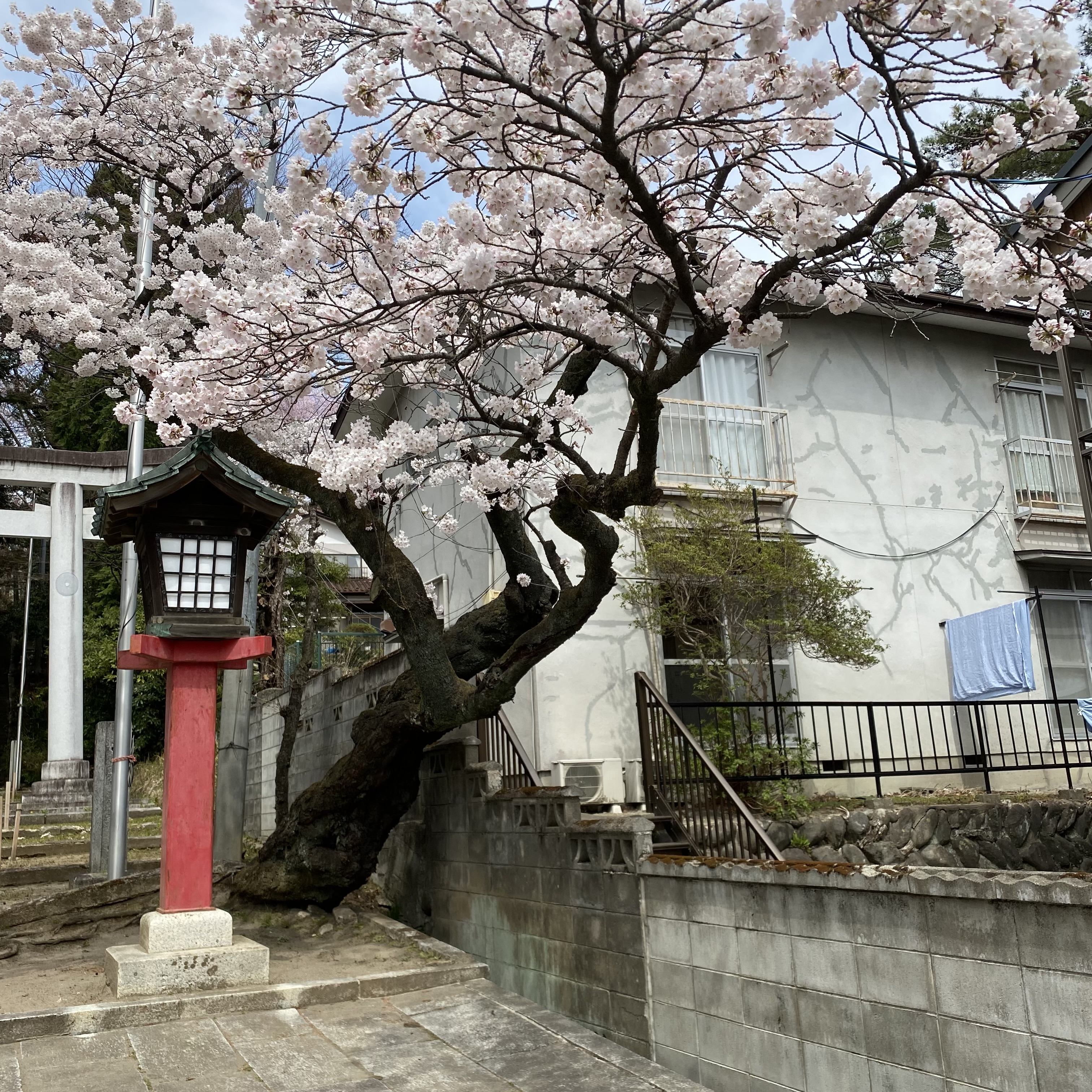
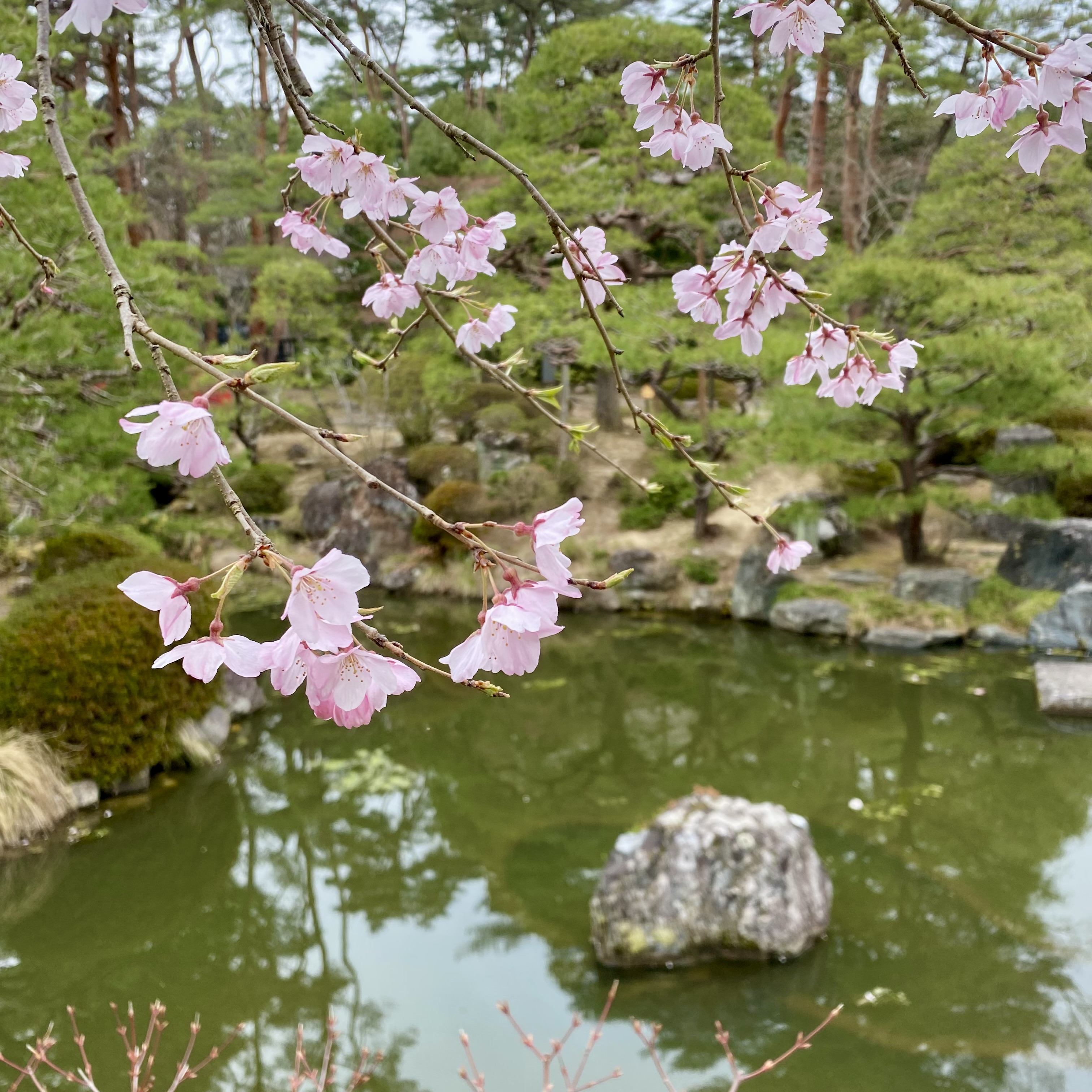
🔴 As for flowers, the first European botanists must have been astounded when they reached the shores of Japan. I was lucky to witness the cherry blossoms…..in town…
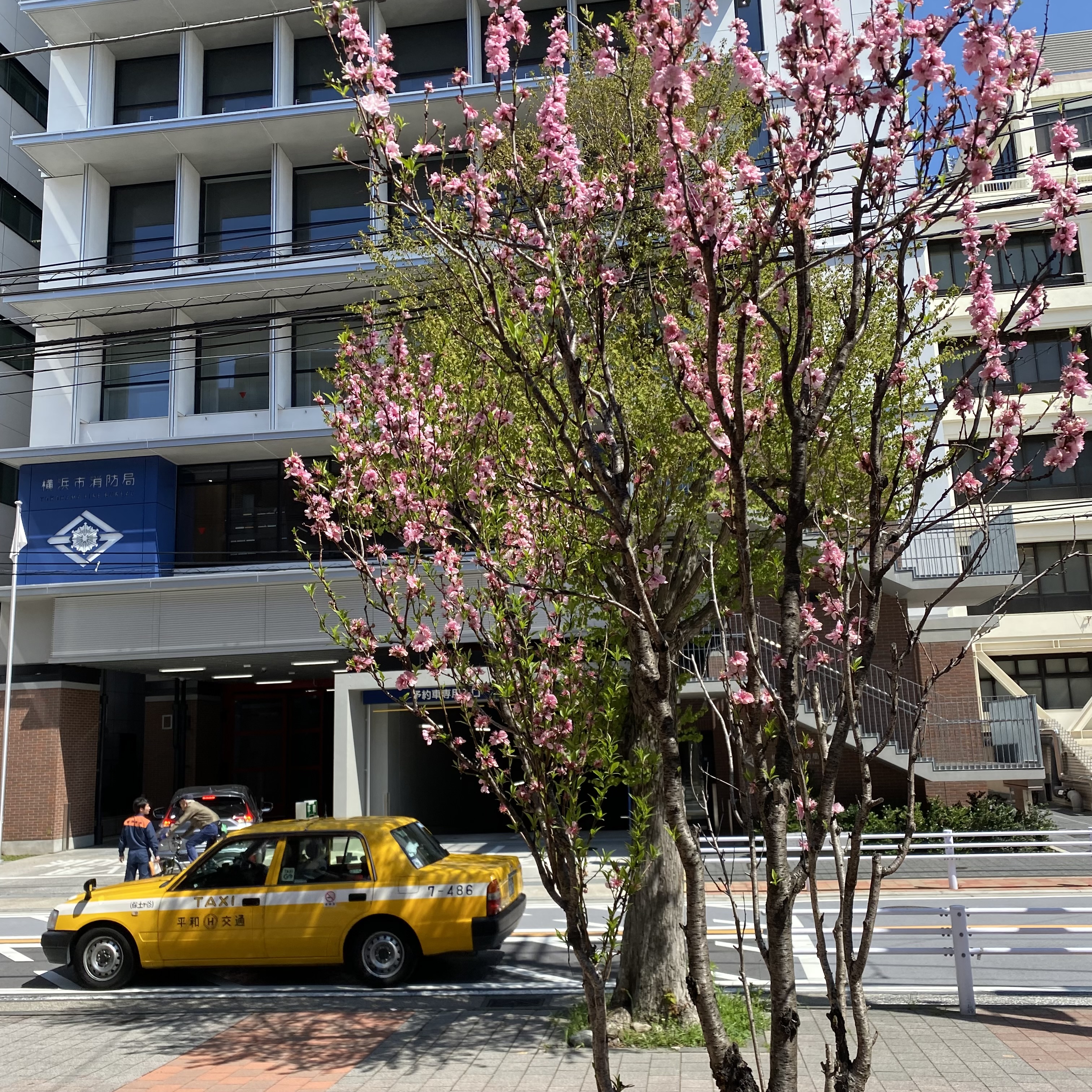
in the countryside……
at temples……
or just about anywhere in fact……
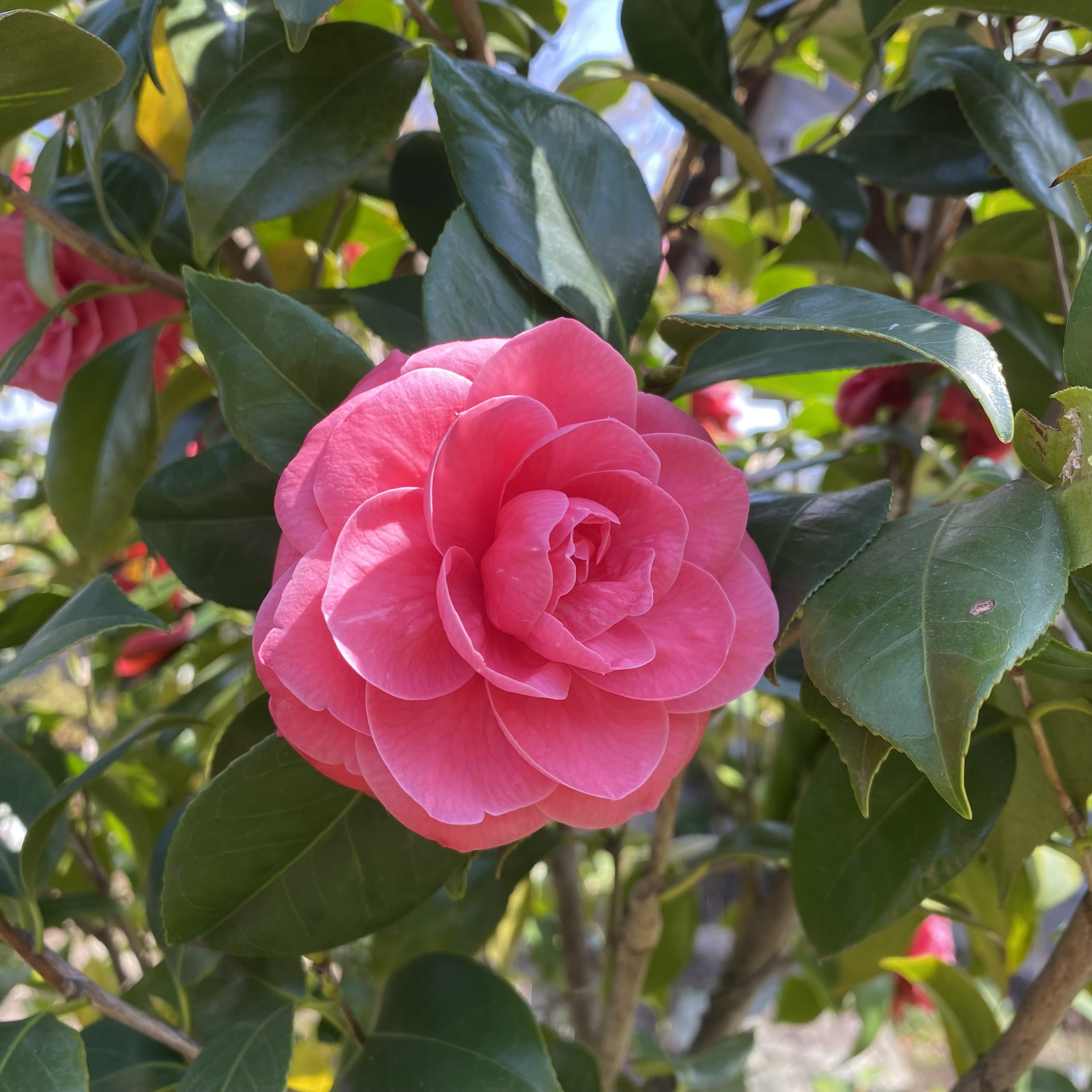
Then came the camelias. The pinkish-red flowers adorn the forests. You walk through carpets of spent blooms on the ground…..
Then it was the peonies turn…….
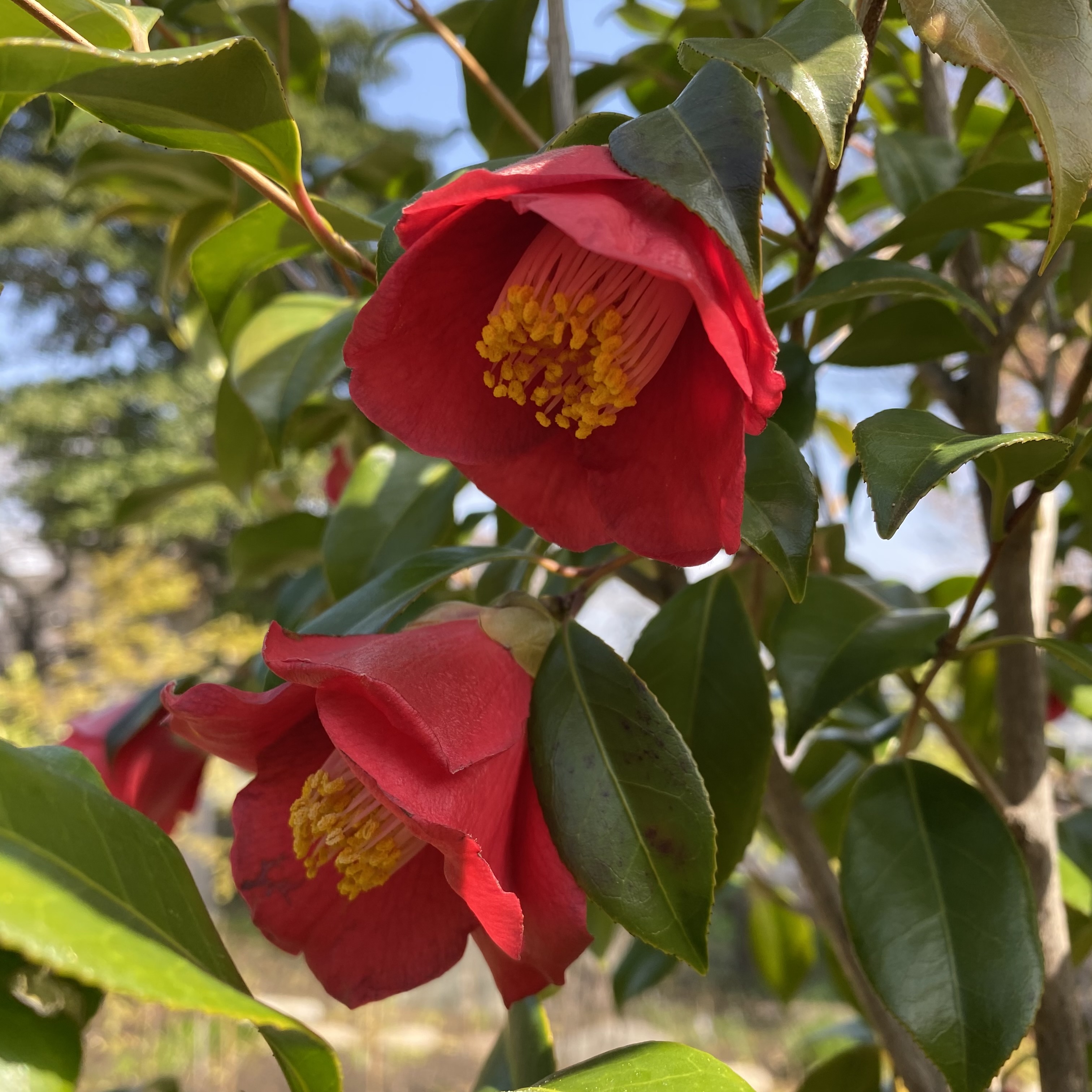
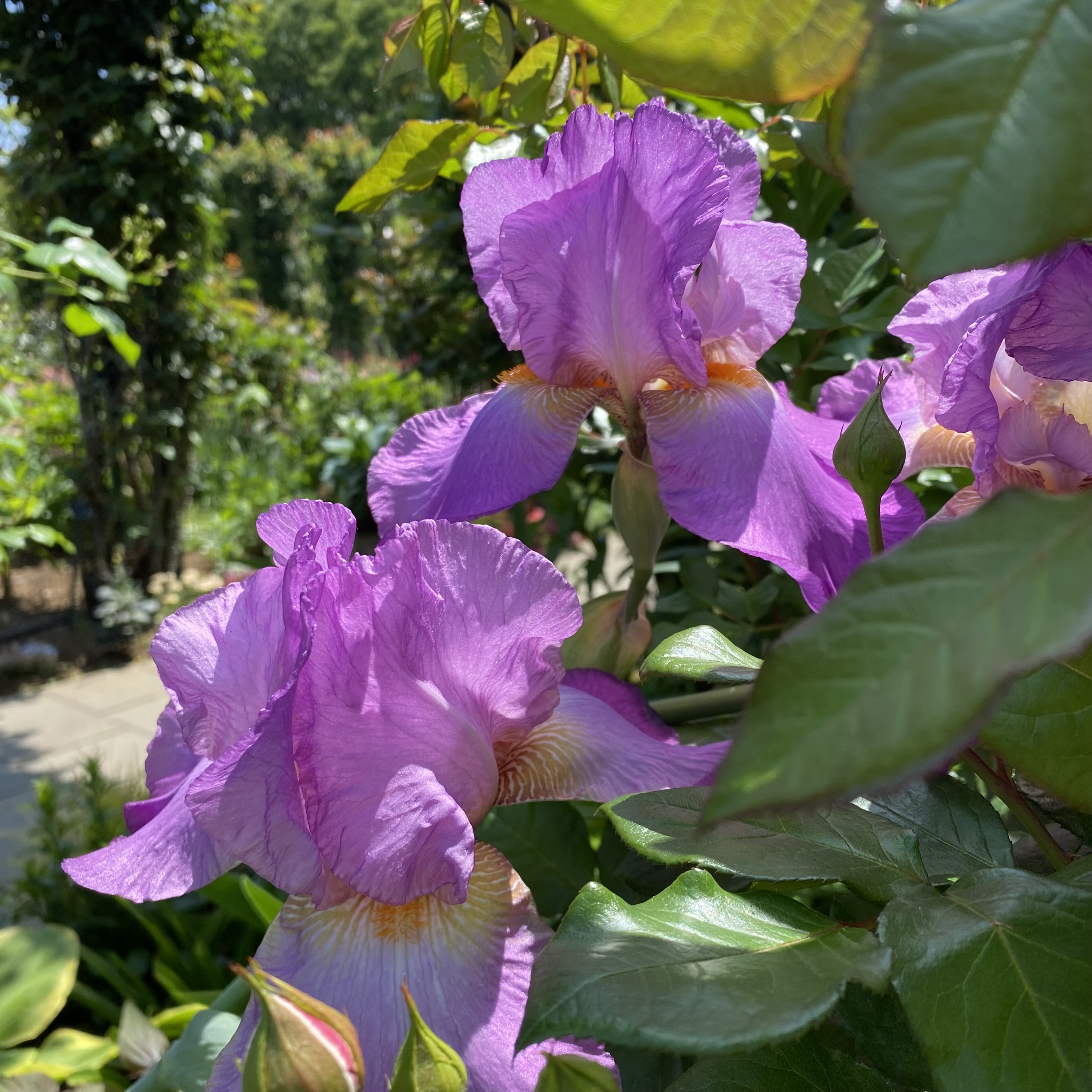
…..and in my last week as I walked in the park at Motomachi, Yokohama, these irises were on every corner – in all colours…..
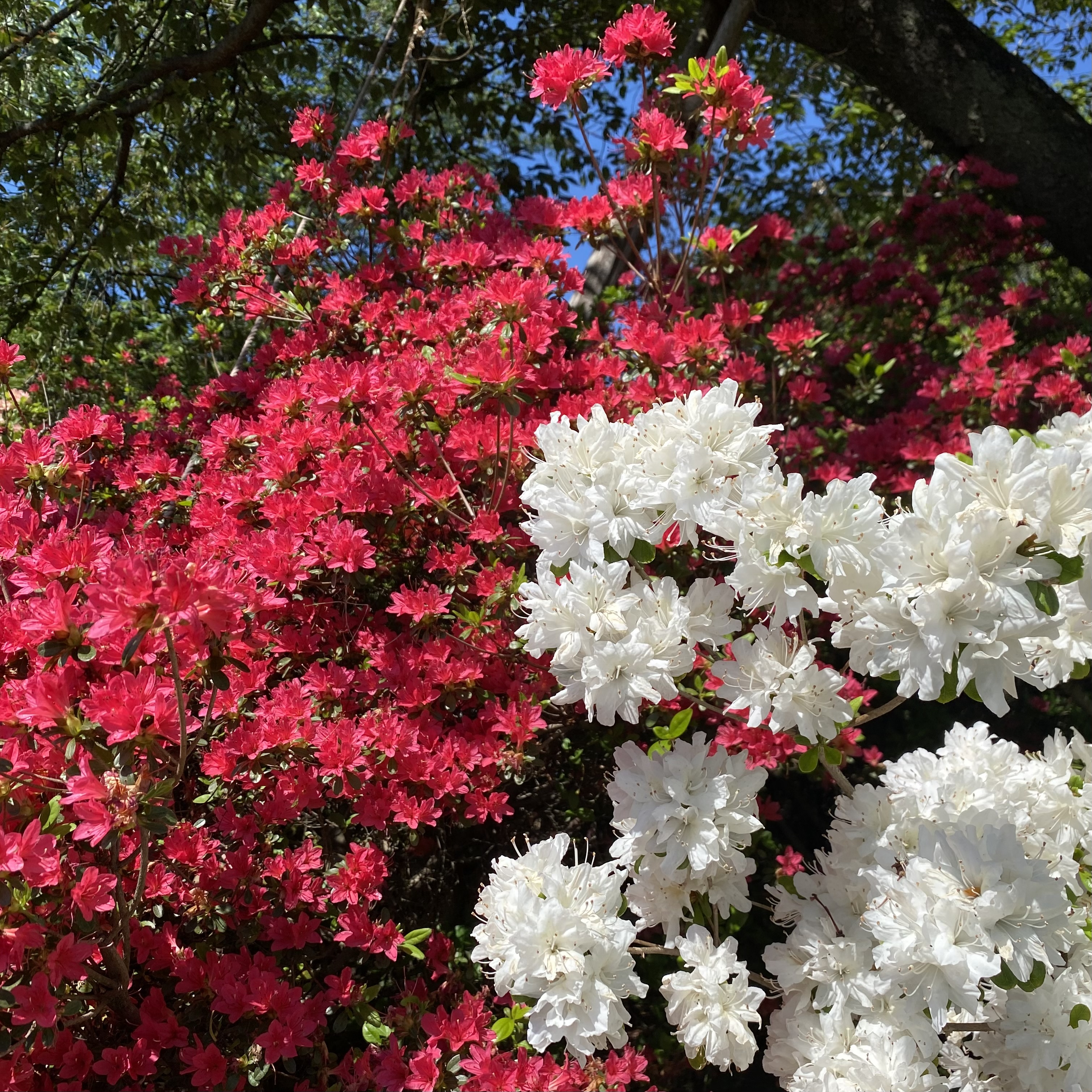
….and walking around the football stadium in Hodogaya there were whole banks of Azalias…
…and if you are crazy enough to go to the Ashikaga Flower Park (Tochigi) in the first holiday of Golden Week……..Wisteria
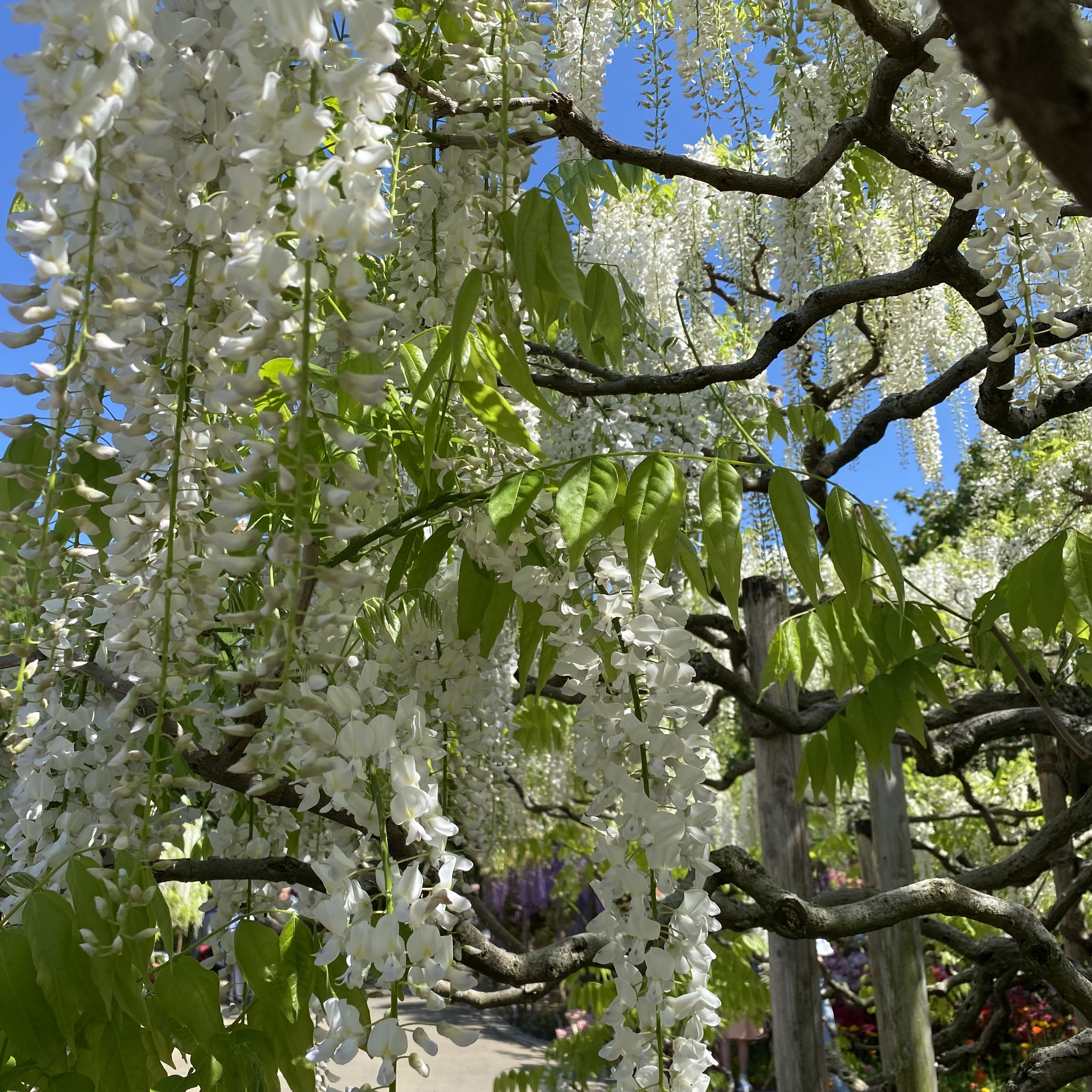
あしかがフラワーパーク
Anyone for Wisteria Ice Cream?
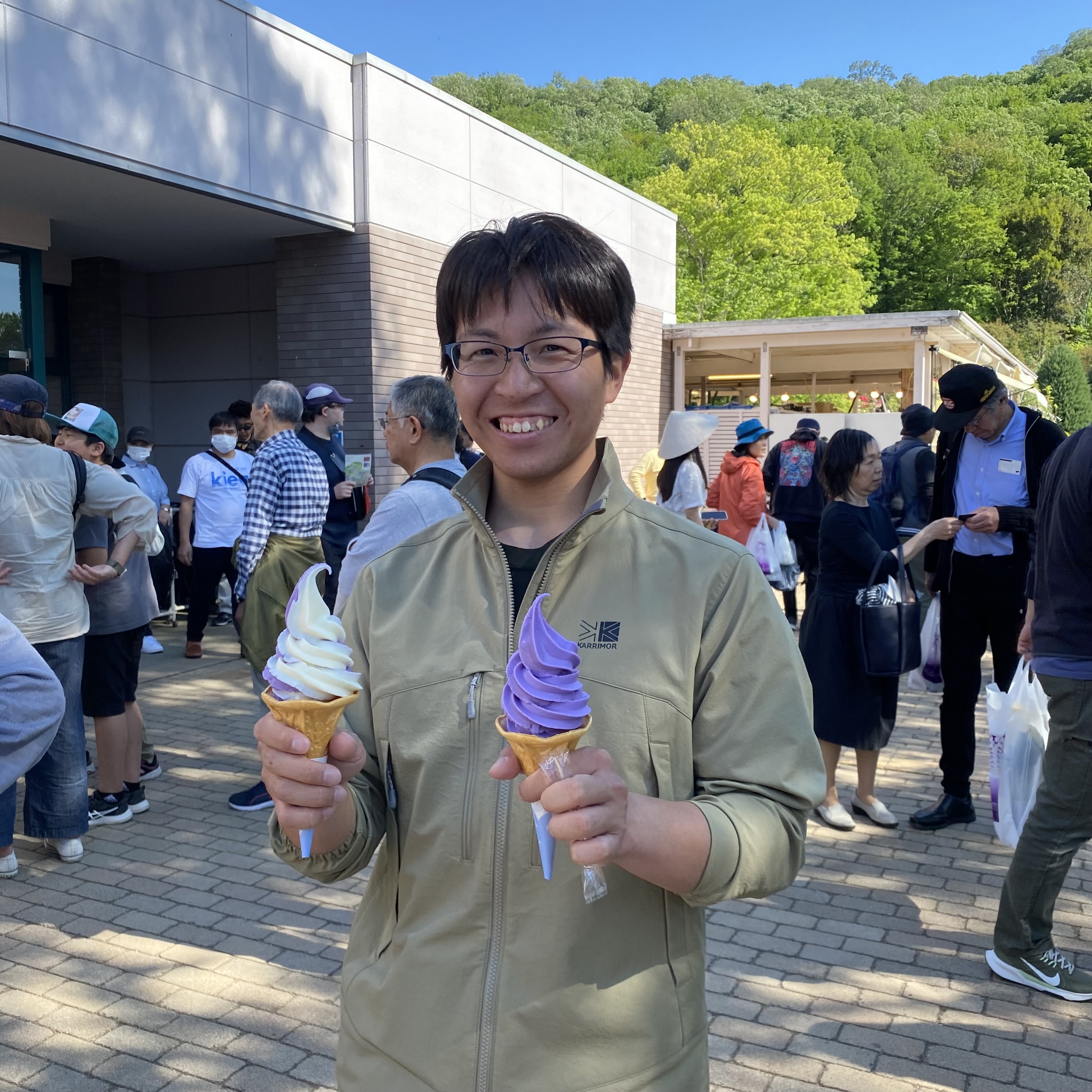
藤のアイスクリームを食べませんか?ツトムさん、ありがとう!
🔴 What’s this? In 2019 a typhoon ripped up a tree on the “bluff” in Yokohama. Underneath was a very un-Japanese foundation. The local council decided to leave it there as a memorial, as it was evidently a western-style house which had been destroyed during the Great Kanto Earthquake.
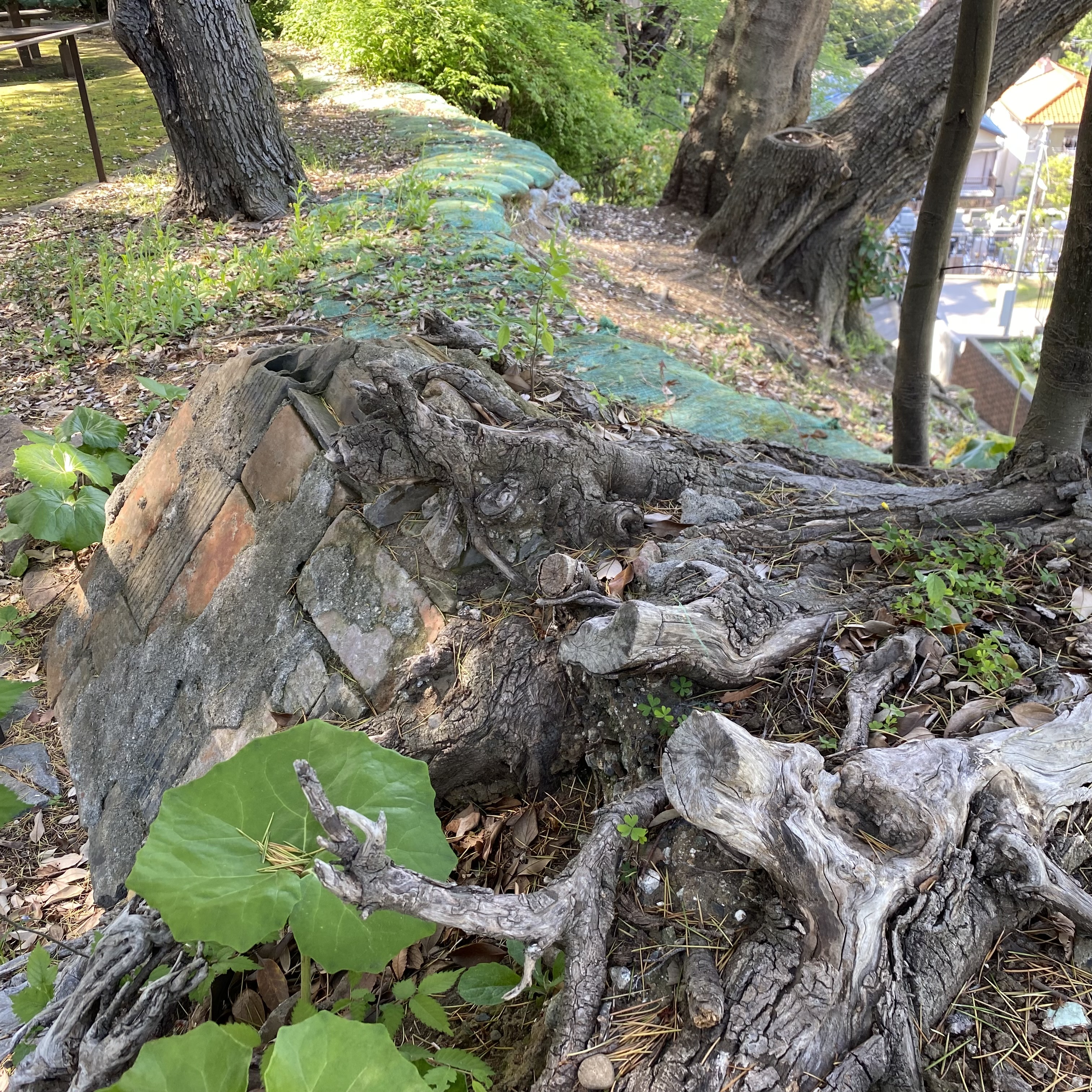
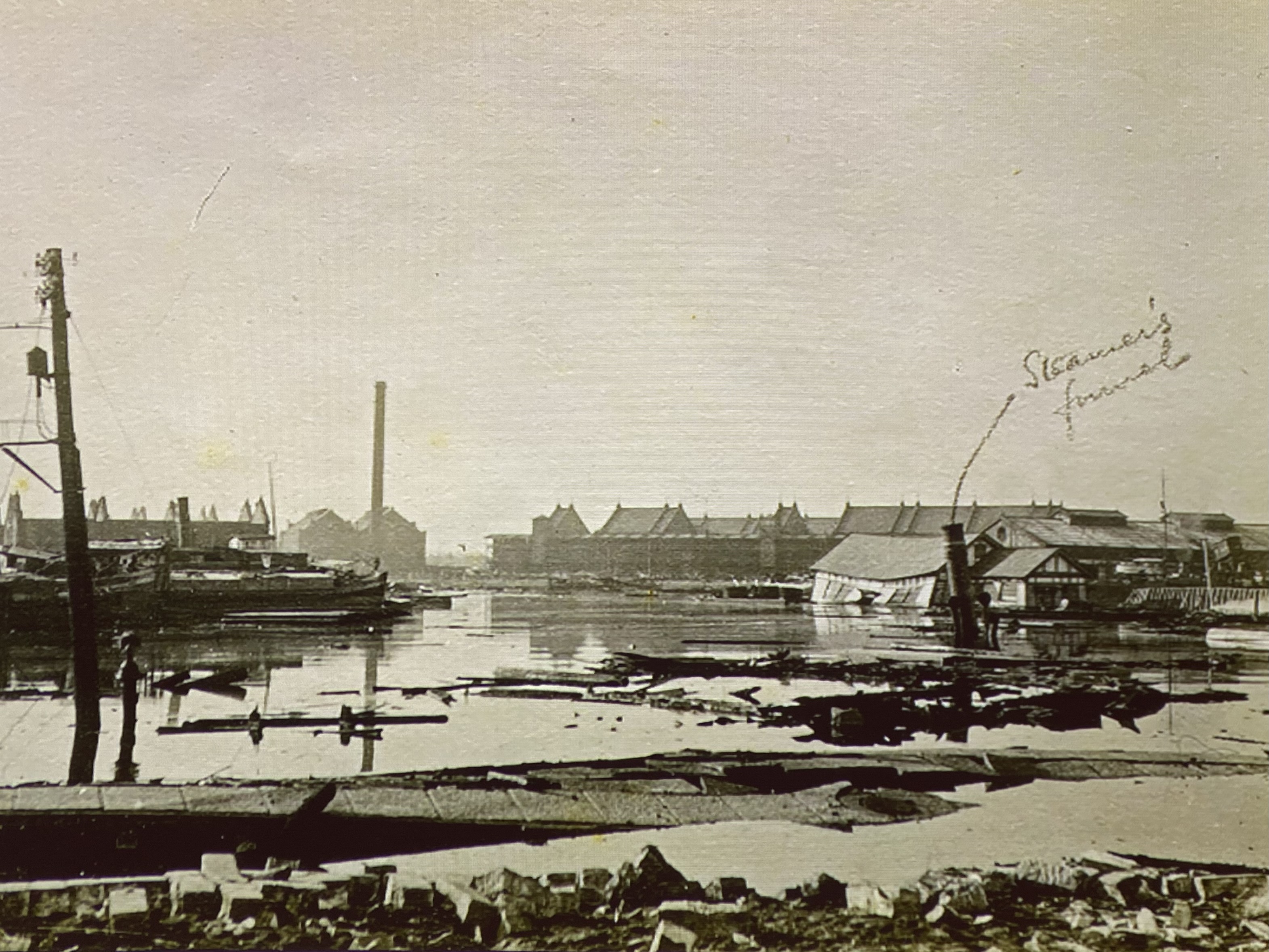
The calm after the storm: Yokohama 1923
1923 年の地震後
🔴 History is everywhere here. Just south of Yokohama is Yokosuka, where the American Admiral Perry landed in 1853. Lucky he didn’t arrive 50 years later, or he would have been met by this: The warship Mikasa. It was built in 1902 and brought from Vickers of Barrow-in-Furness in the UK for the Imperial Japanese Navy. It sunk a few Russian ships in its time.
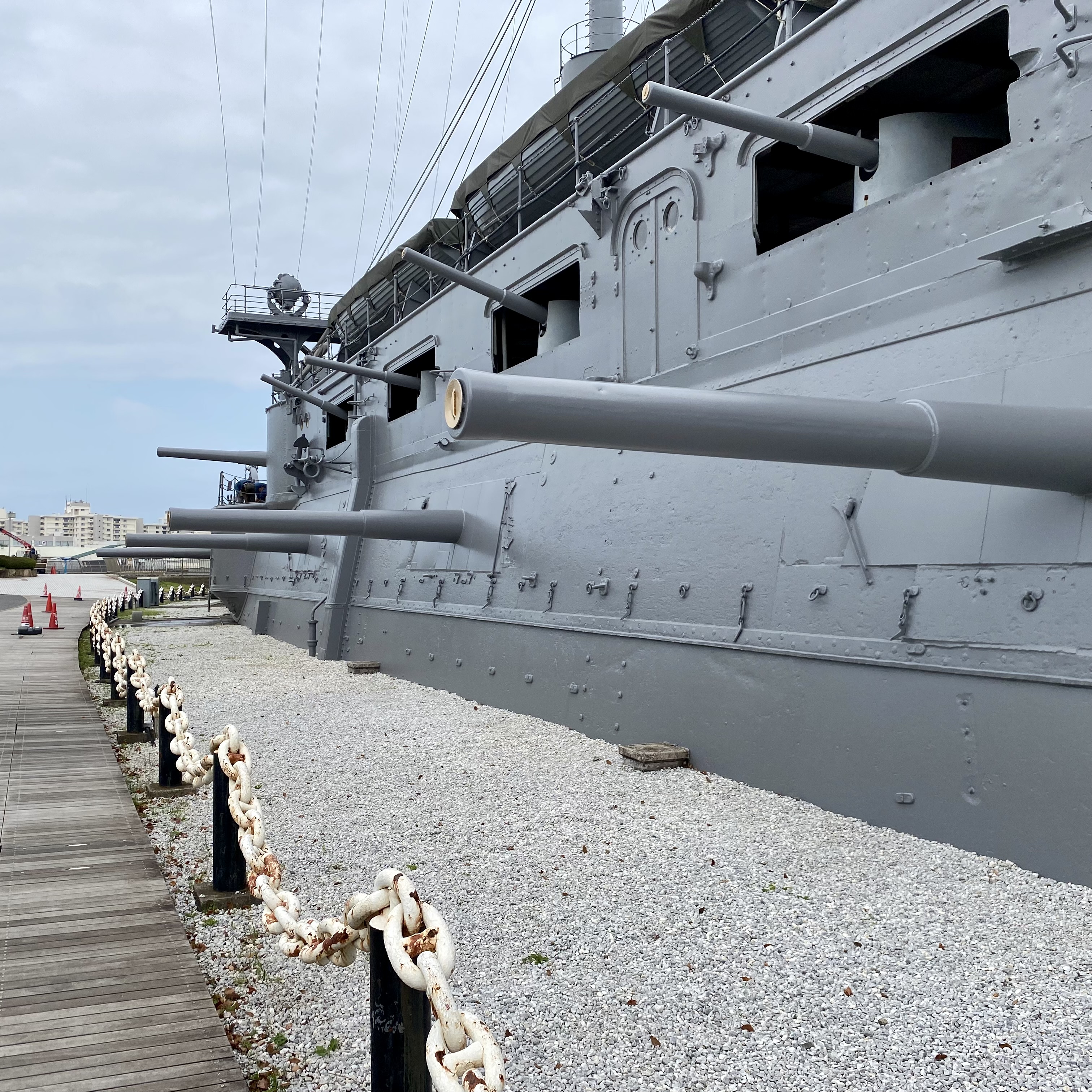
1902年に建造された軍艦三笠
In the event, Perry passed by Sarushima Island, and arrogantly re-named it “Perry Island”.
Not well received. It had been a gun battery for the Tokugawa Shogunate.
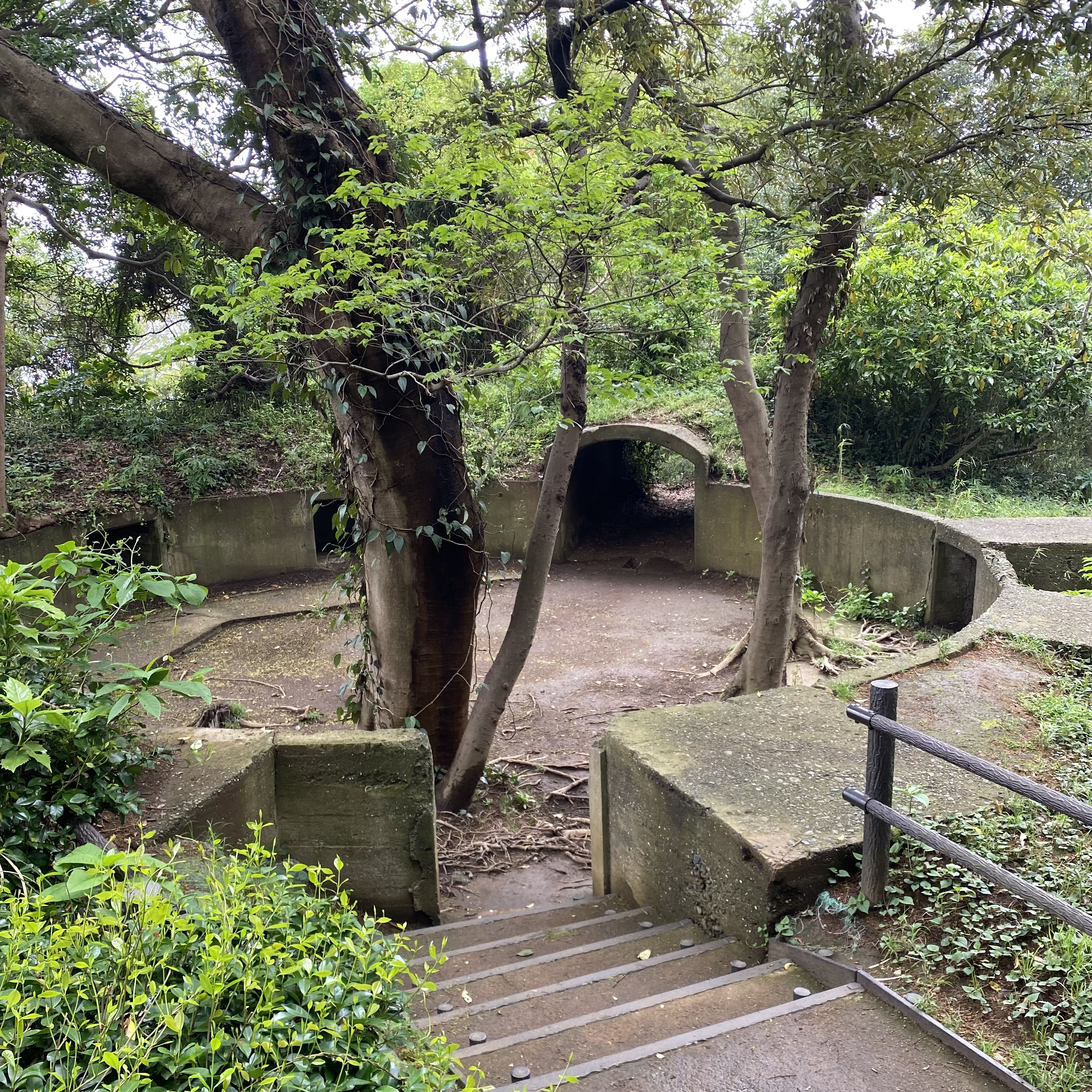
猿島
🔴 Meanwhile the old undisturbed Japan was going about its feudal ways in the hills of Gifu and Nagano. A house on the Nakasendo way…..
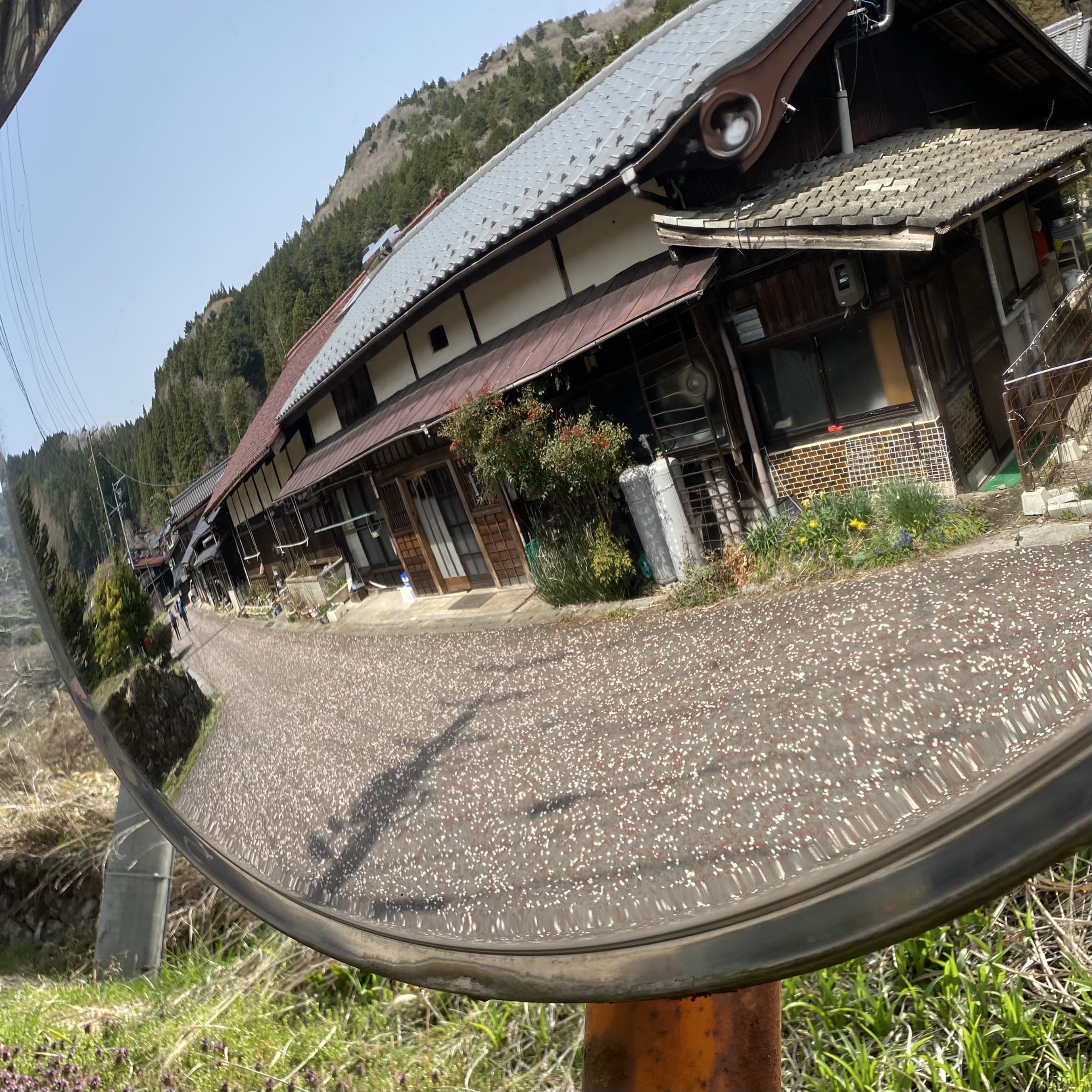
中山道
…and the burial sites of the prehistoric Jomon culture were yet to be excavated.
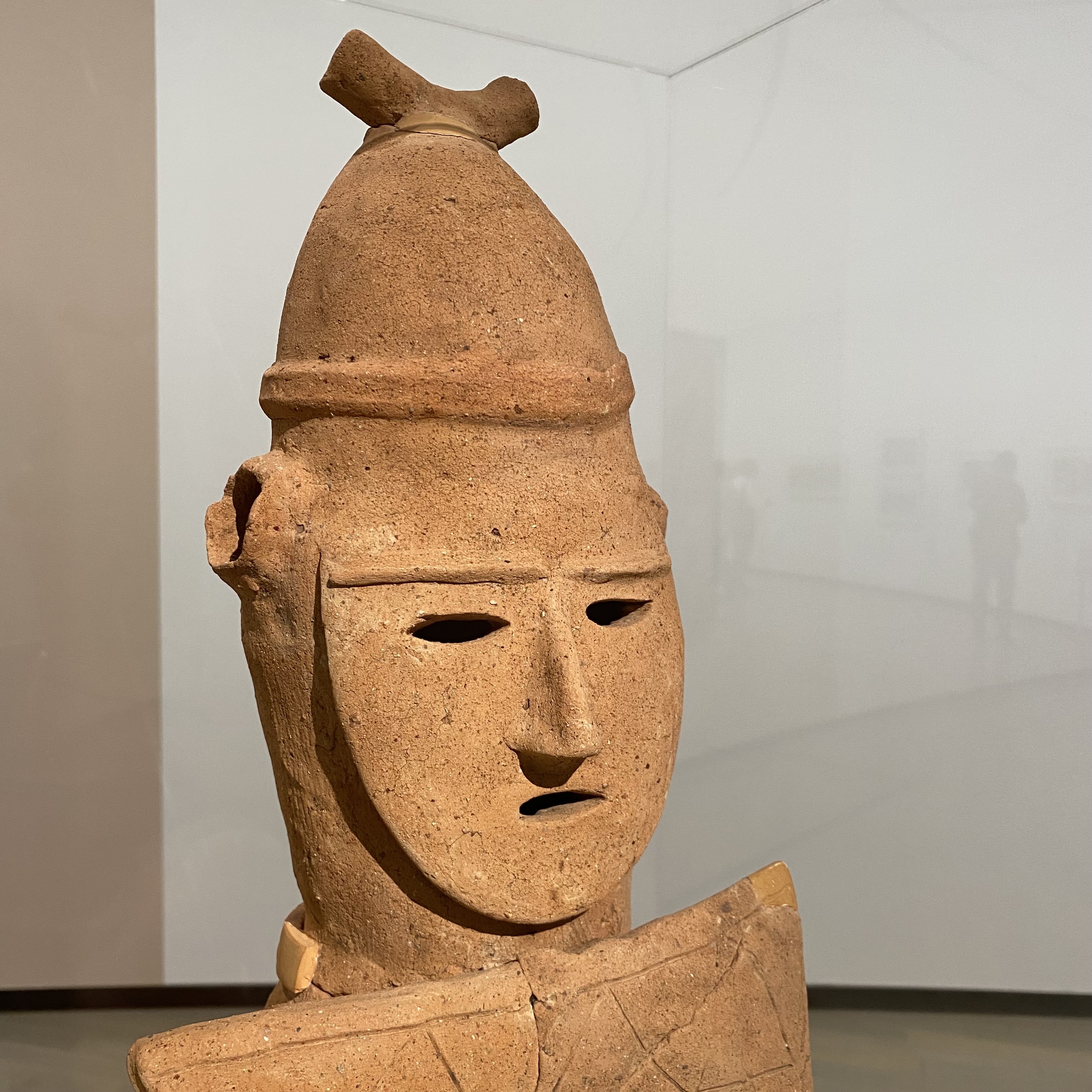
縄文文化
🔴 It is much harder to find the past in the sprawling metropolis of Tokyo. I took this picture from near the Tokyo Skytree. It shows Sumida Ward with the Sumida river: well known to Katsushika Hokusai ( 葛飾 北斎 ) the famous Ukiyo-e artist.
Tokyo throbs. It buzzes. It works.
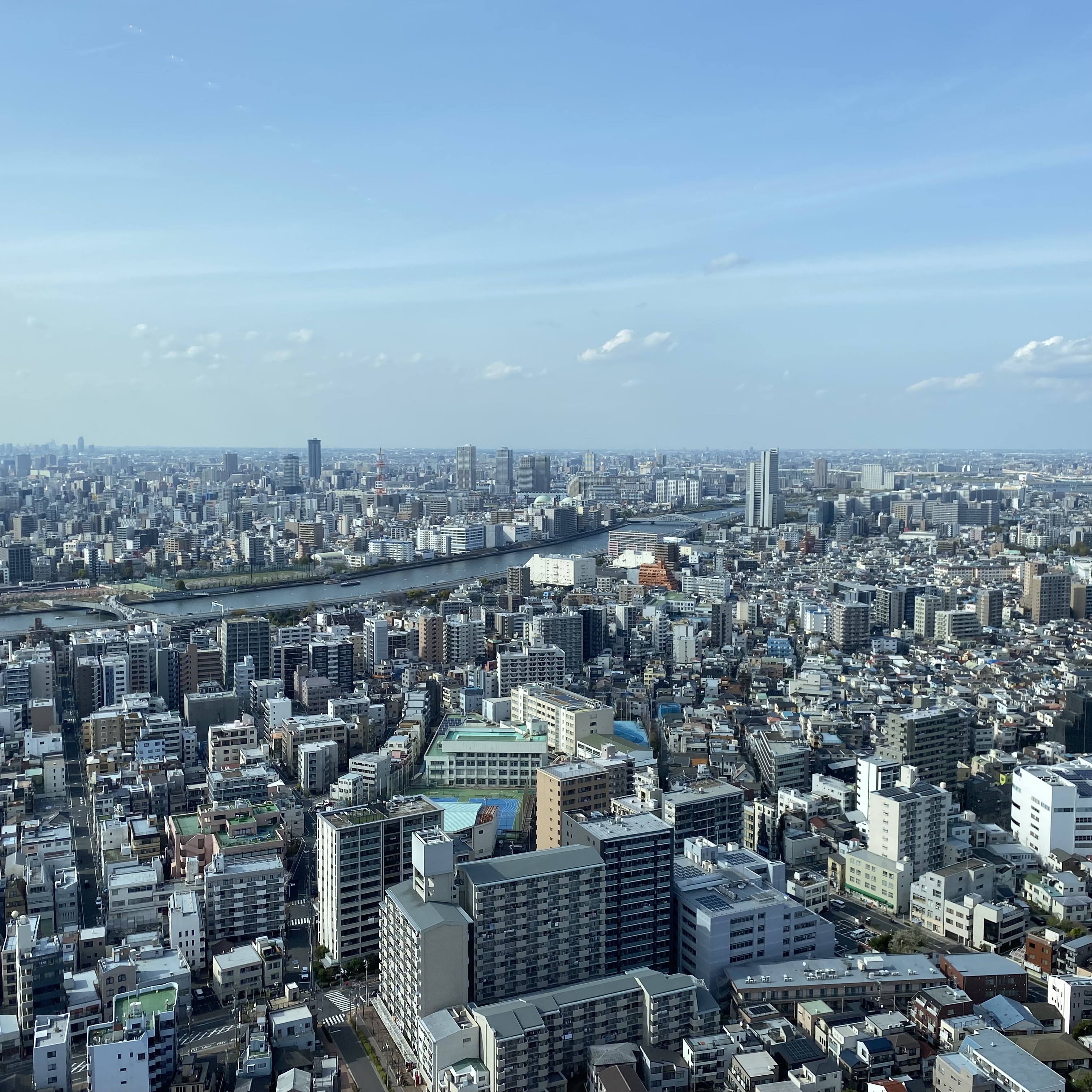
隅田川の眺め
🔴 Back to Yokohama.
Along with Kobe, it was one of the first ports to open up to western traffic. But these first westerners were not artists or idealists. They were businessmen (“Merchants”). And there were lots of sailors who had been cooped up in steam ships for too long ⚓. Two cultures clashed. It was a chaotic and tense period. The British and American governments asked the Japanese authorities to build a “pleasure zone”, which acted as a buffer between the port and the town. Nowadays tourists arrive on cruise ships….
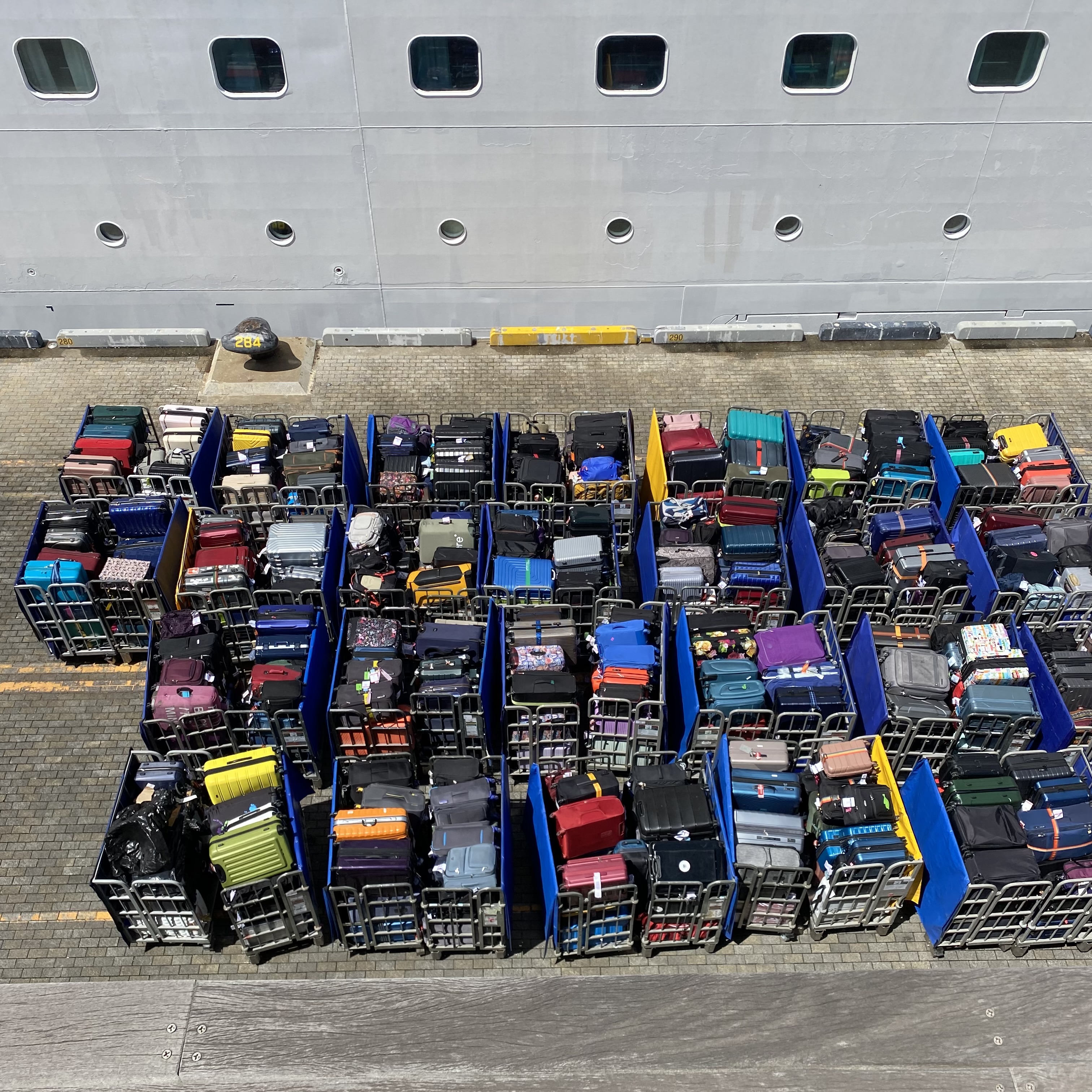
…..or by train🚅
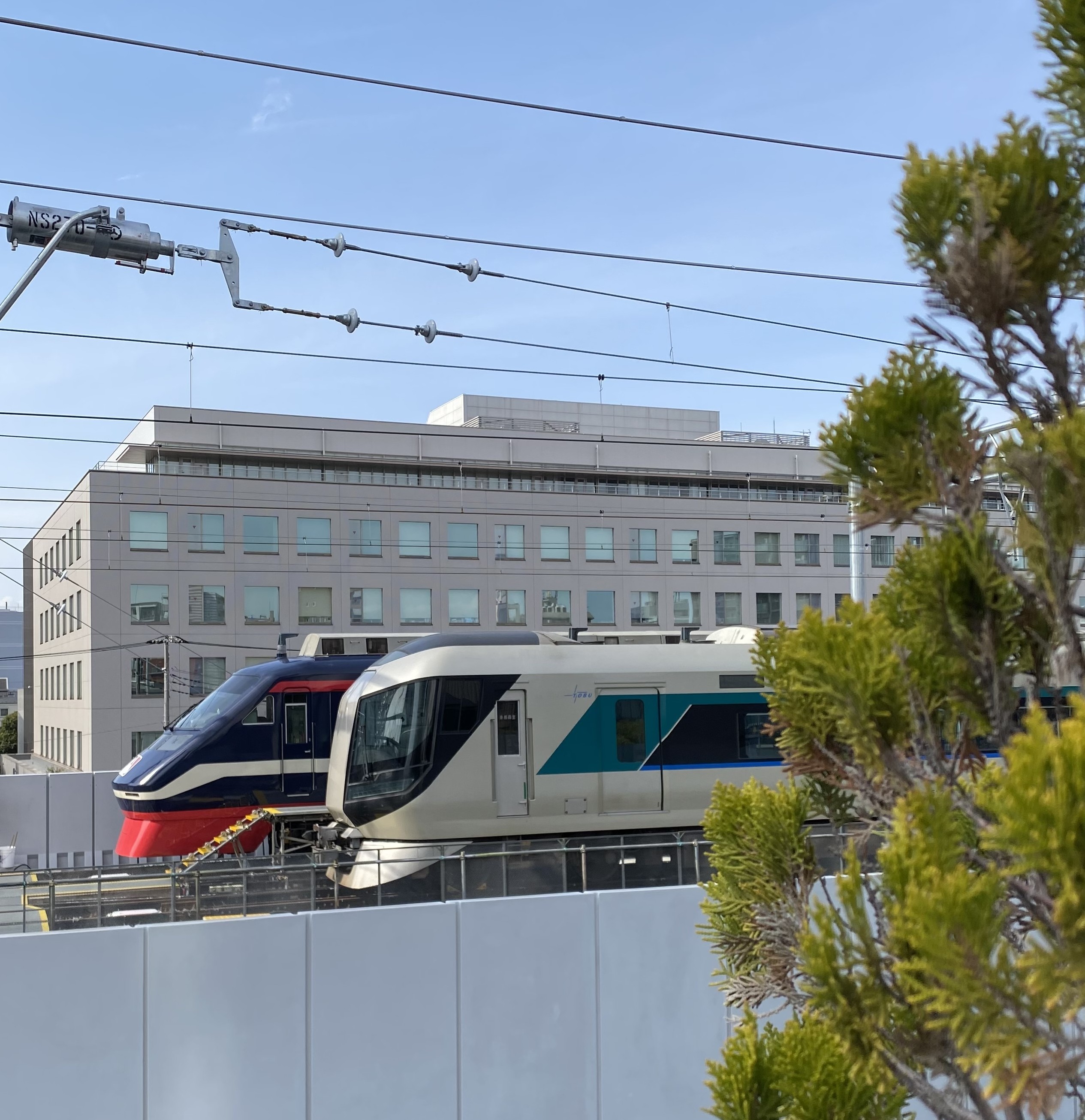
The buffer zone (aka red light district) has since disappeared, in part due to the earthquake and the subsequent fire bombing in WWII twenty year later. Yokohama has been through a lot.
A Norwegian cruise ship docked at the Osambashi pier
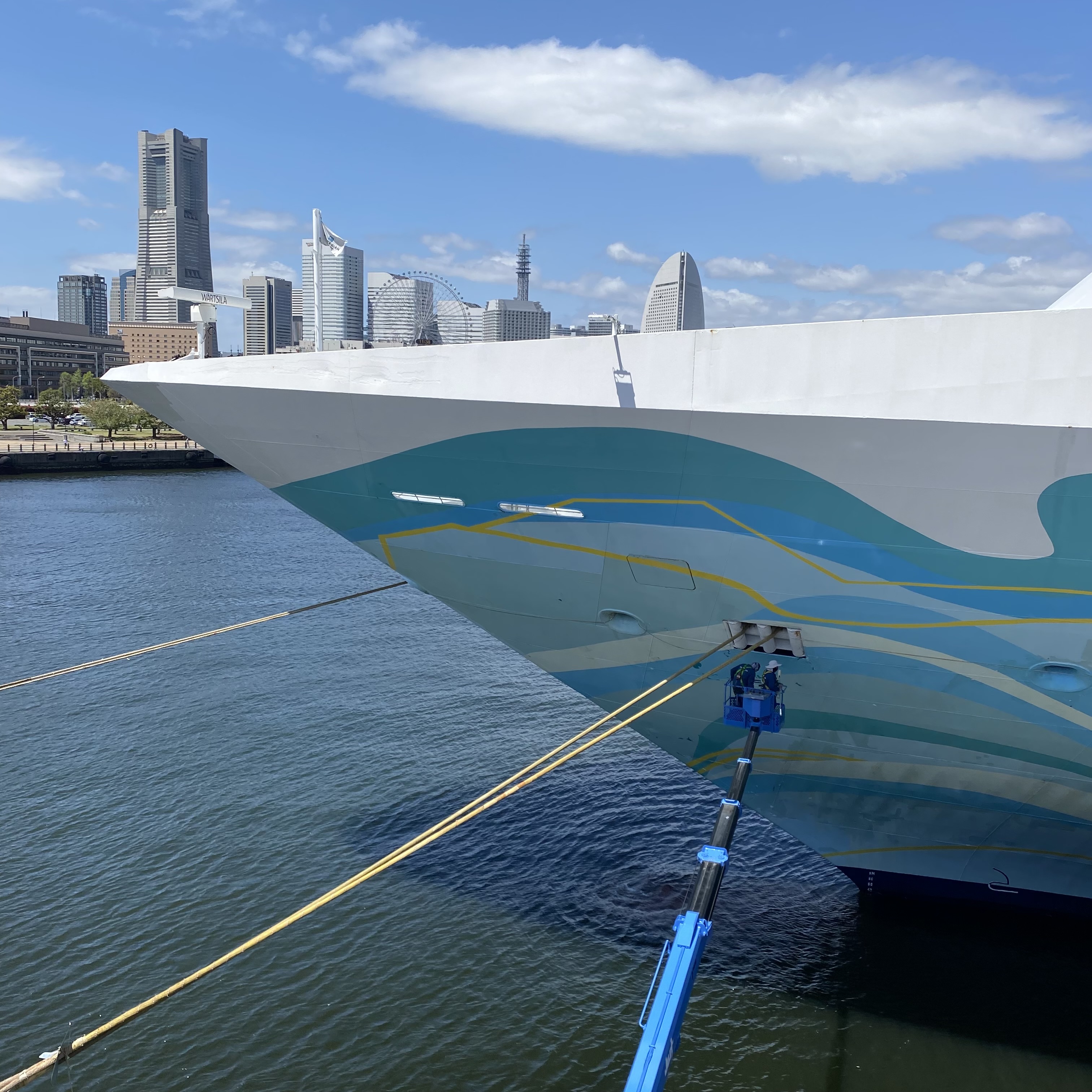
大さん橋埠頭に停泊中のノルウェーのクルーズ船
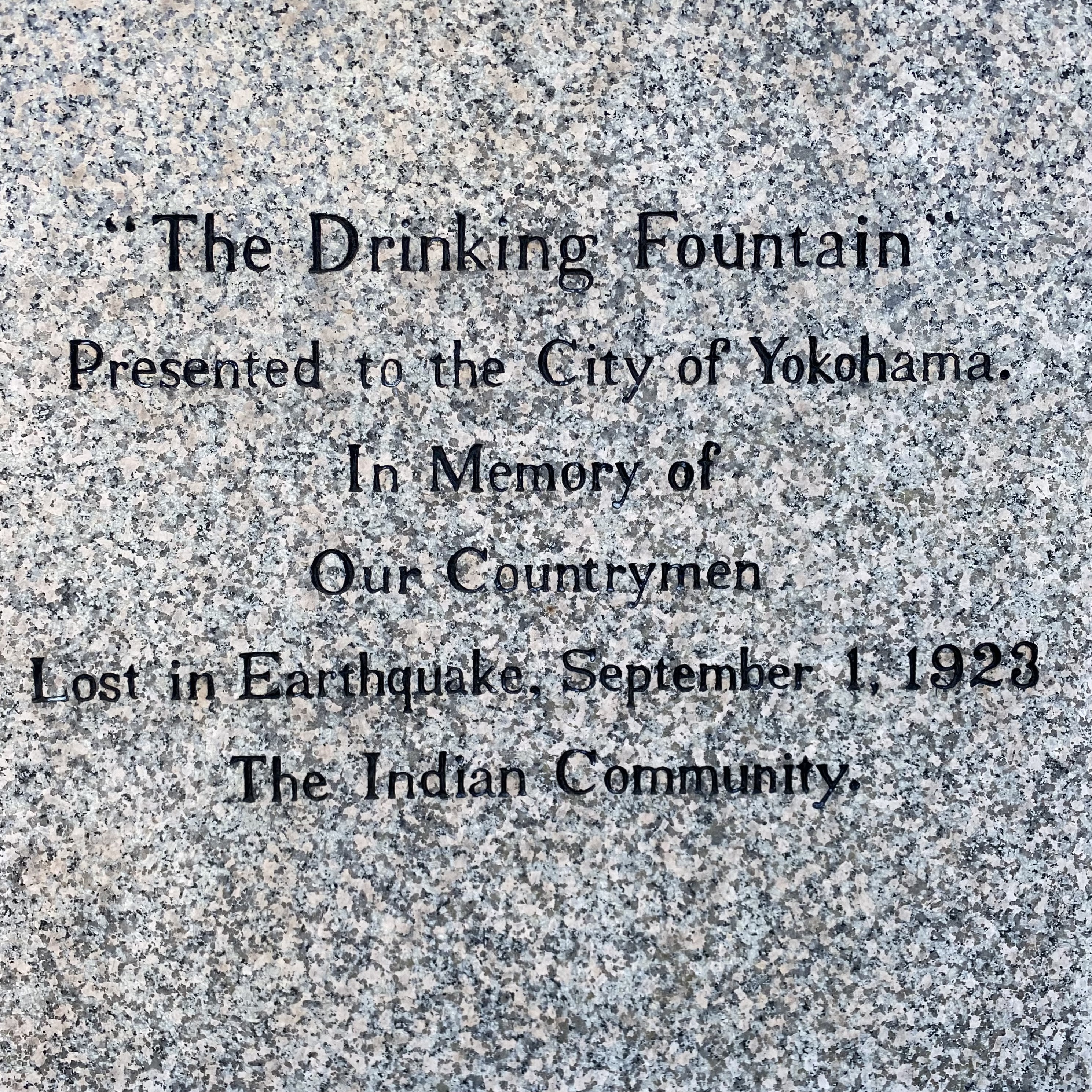
🔴 An unusual memorial in Yamashita Park – the park itself being created on the waterfront with rubble from the 1923 destruction
…….
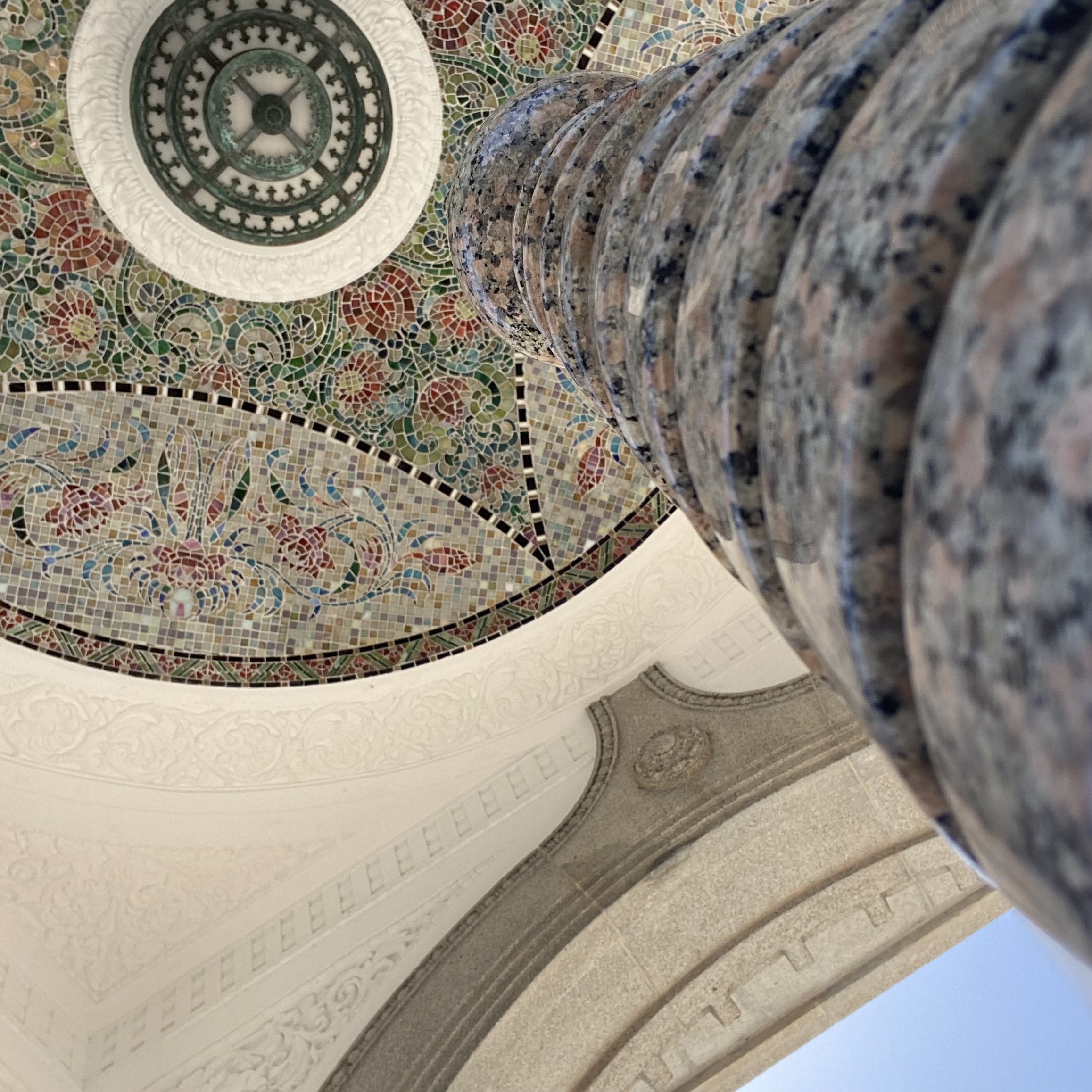
インディアン記念碑の天井
🔴 People…….have to work. Although distance working (Zaitaku Kinmu 在宅勤務 ) has become much more common after Covid.
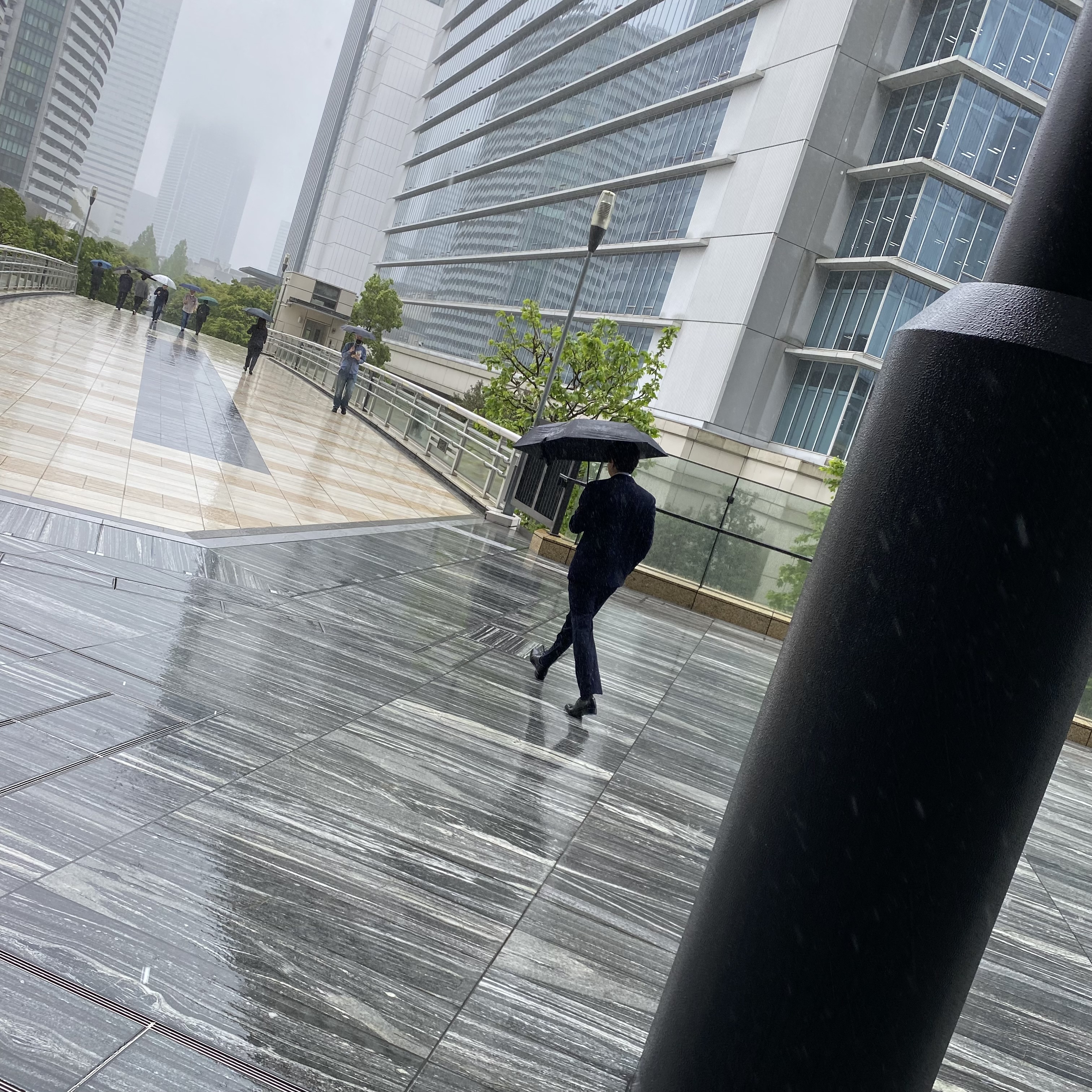
人々は働かなければならない
Peoples’ needs…….a vending machine, a postbox, and a launderette (“coin laundry”) . What more do you need?
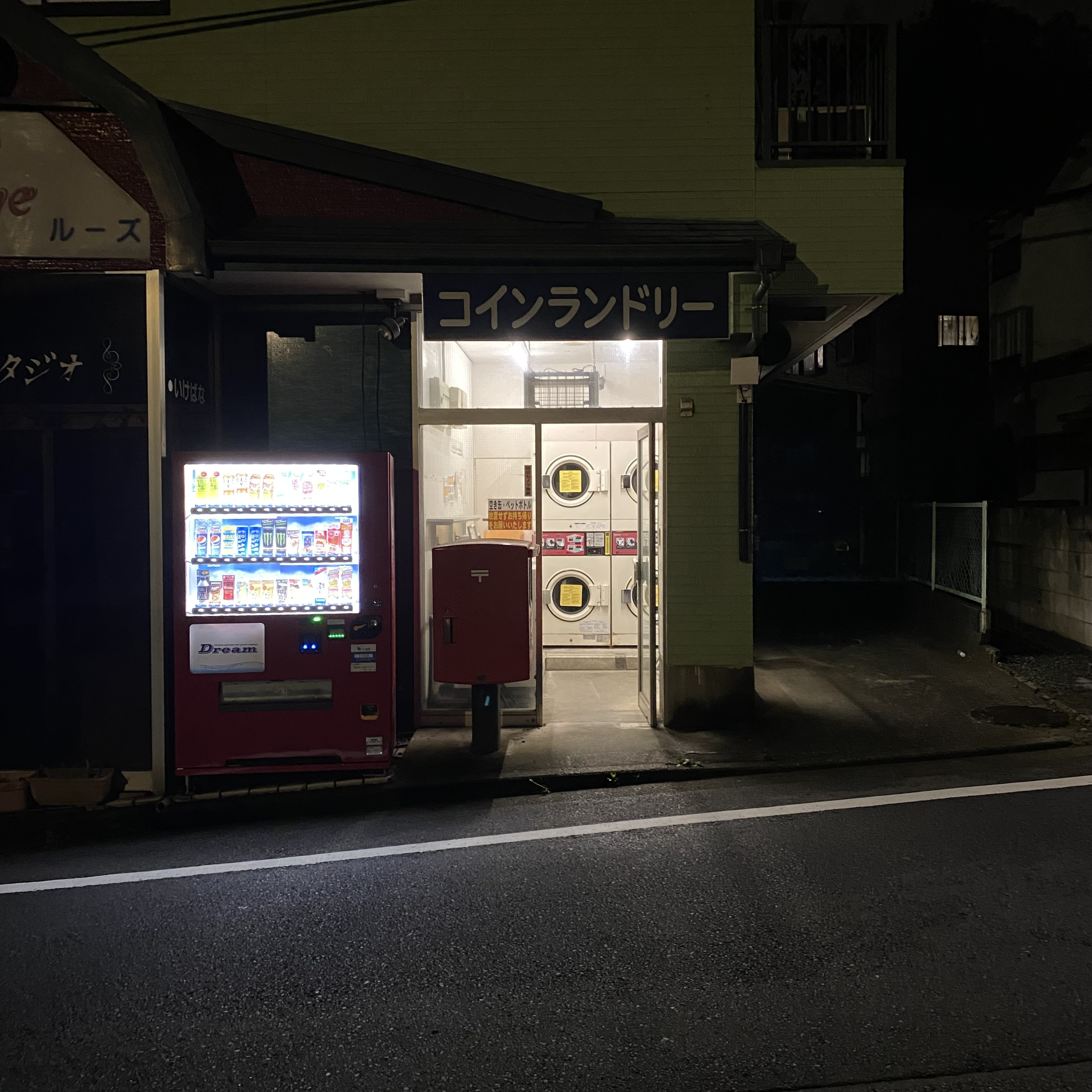
このコインランドリーが必要な人もいる
🔴 Every year children have a special day :”Kodomo no hi” on May 5th. But the carp streamers (Koinobori) are already flying here in Nagoya. Originally Tango no Sekku, the day has been celebrated since the Kamakura period in the 12thc. The black carp (Magoi) represents the father, the red one (Higoi) the mother. All the others are the children…..
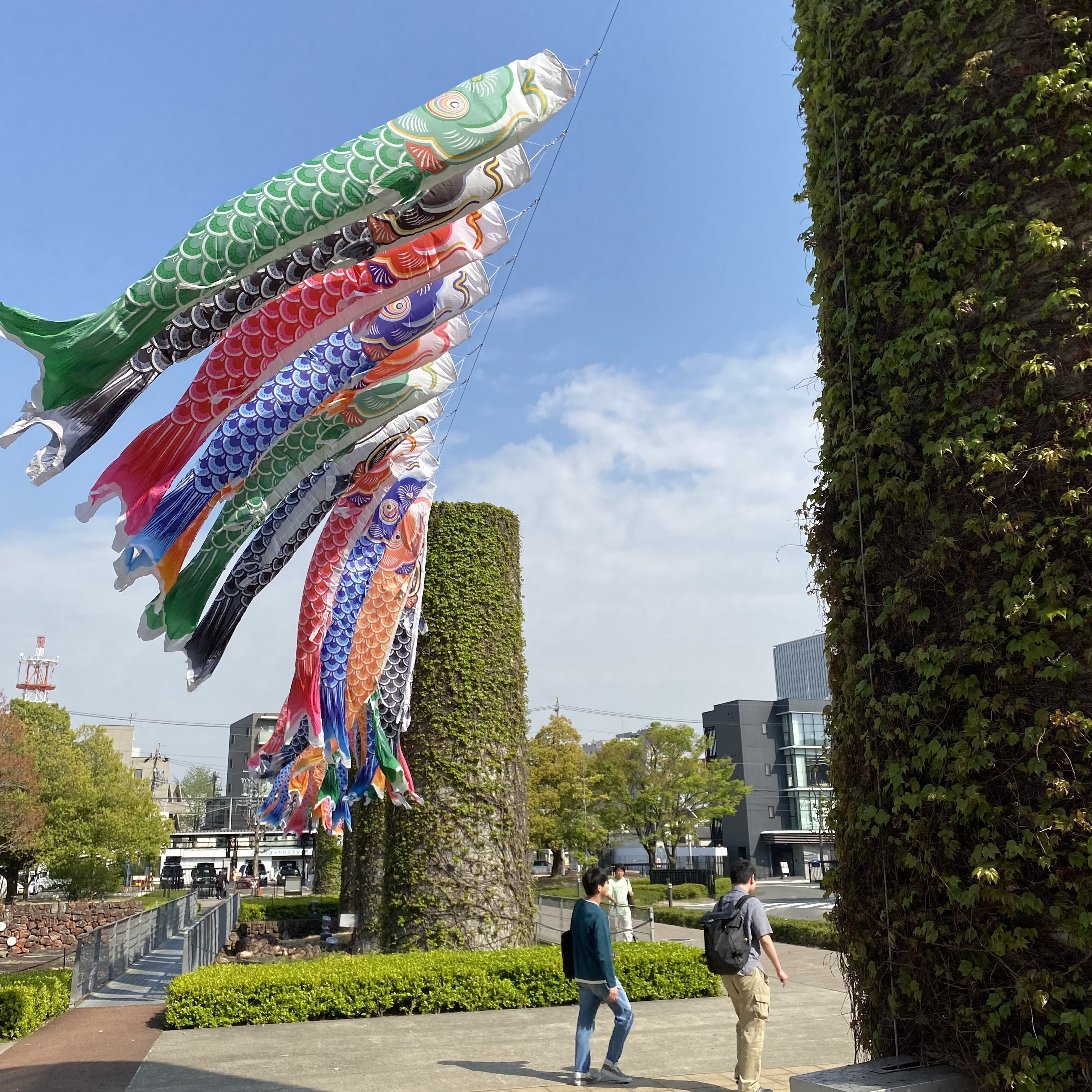
子供の日 (Nagoya)
But the children are not always happy……
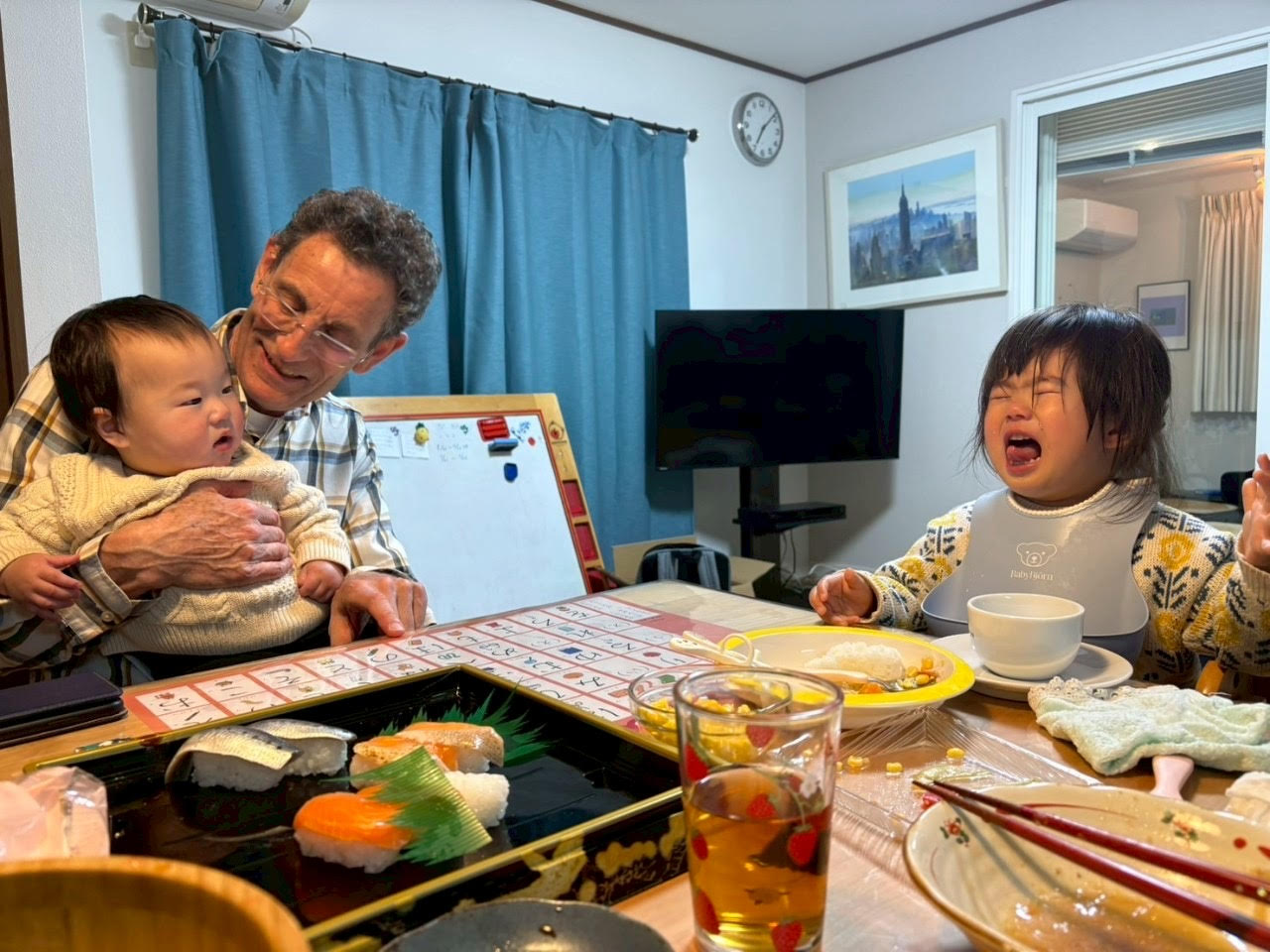
Kotaro-chan : “what’s up big sister?”
「お姉ちゃん、どうしたの?」
Meiko-chan: “I want my violin!”…….
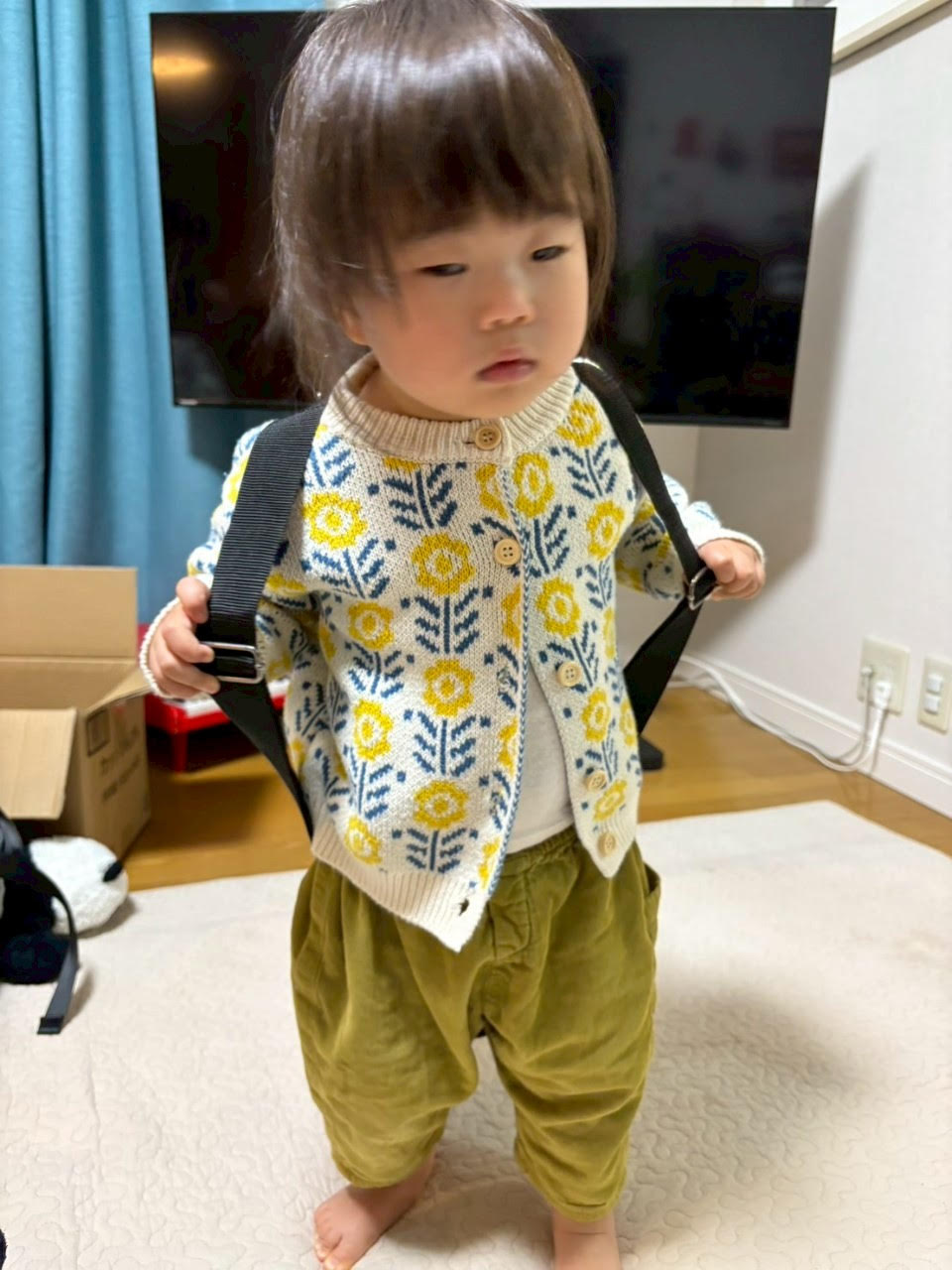
“ah…..that’s more like it…….👍”
「バイオリンが欲しい!」……「あぁ……それもいいな……」
People are helpful. Here a shop owner helps us find the way back to our hiking trail in Miyagi….
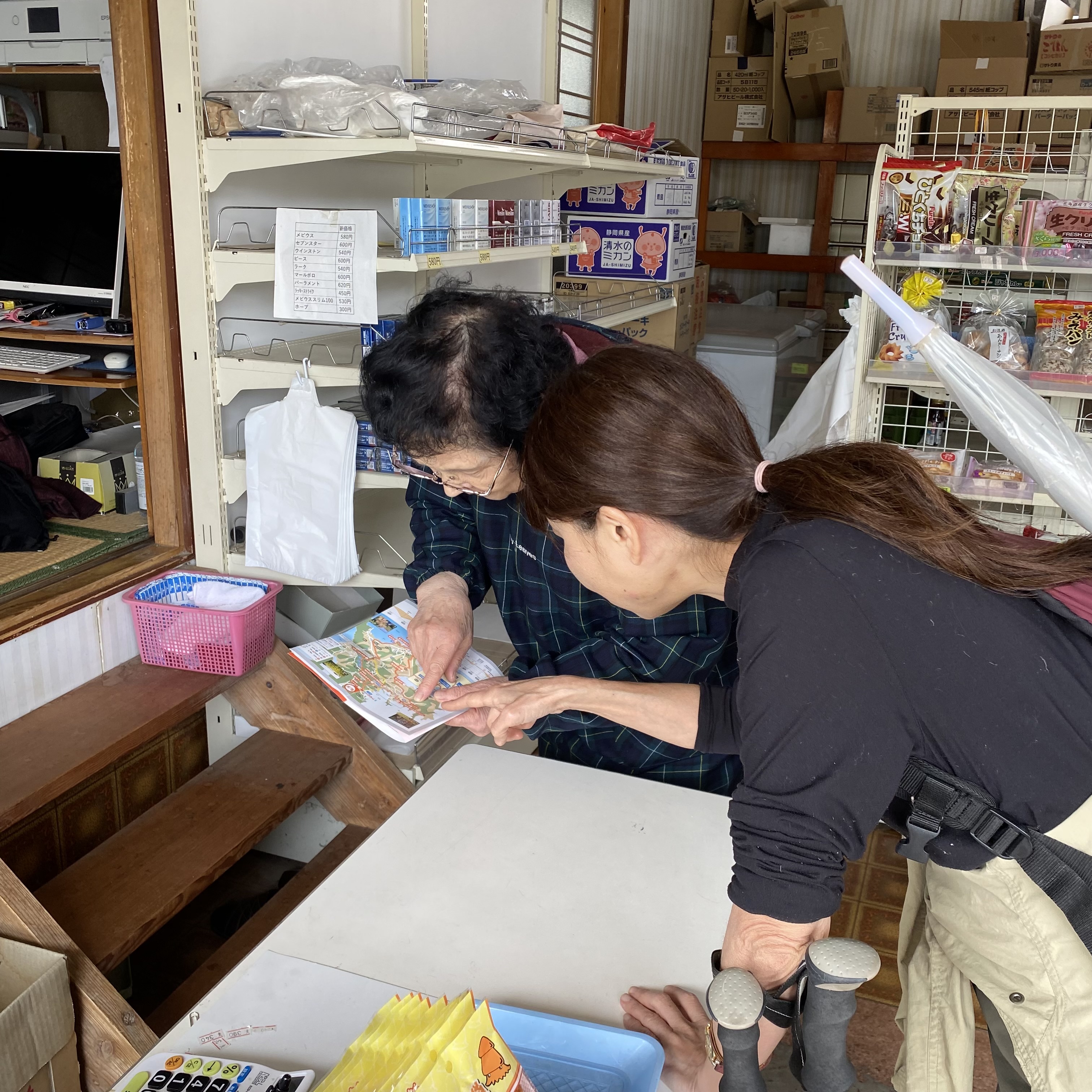
店主が道案内をしてくれた
🔴 Furry friends. “I will sleep where I will. For I am a cat”
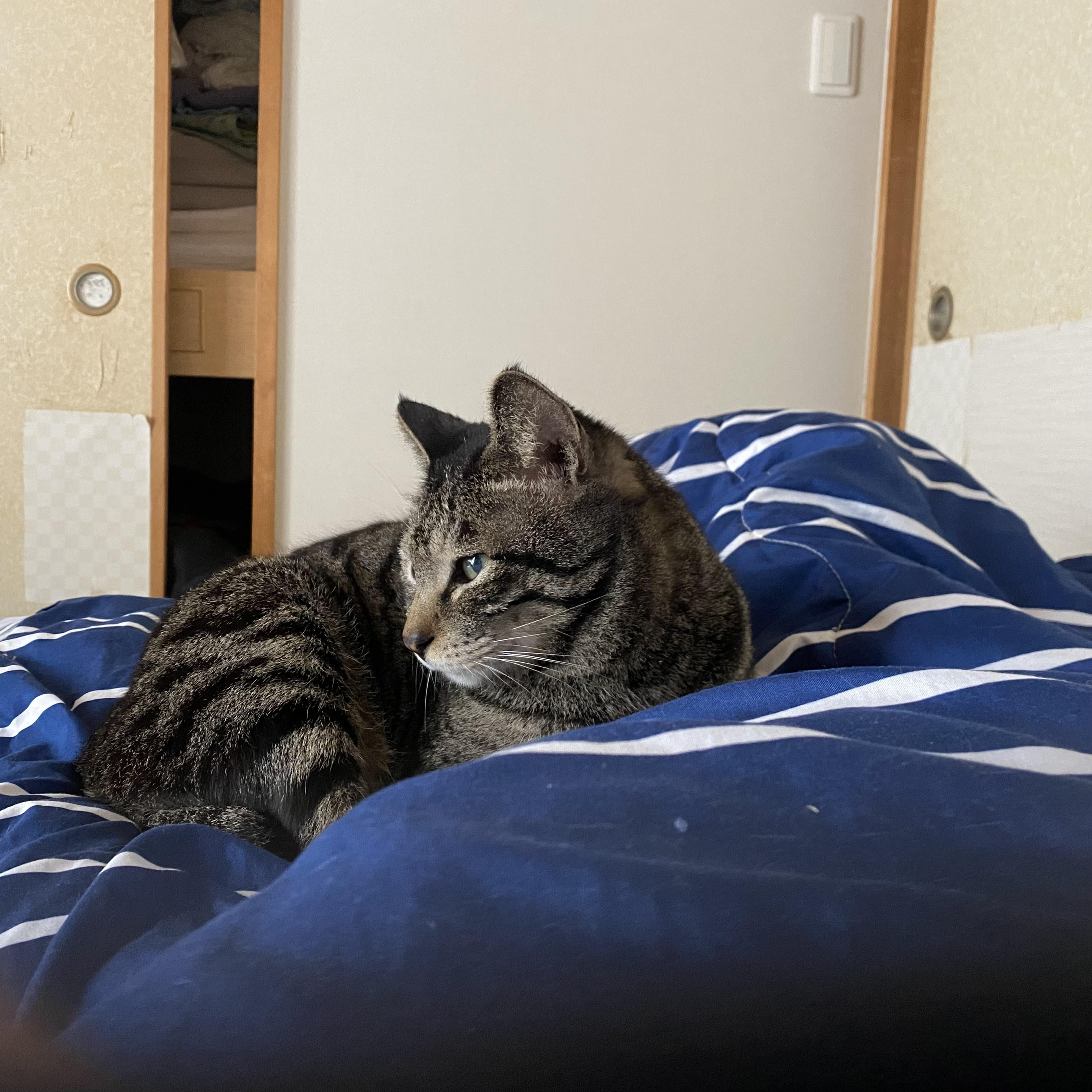
吾輩は猫である (Wagahai wa Neko de Aru ) 🙄
“I will reign from here…..for I am the queen……”

ごろちゃん
🔴 Foreigners photograph the oddest things…….Behind the Tsunami wall on the Miyagiolle trail….A harbour no more….
The Anglican – Episcopal church in Yokohama. Apparently only 1.5% of the Japanese population profess to be Christian…….
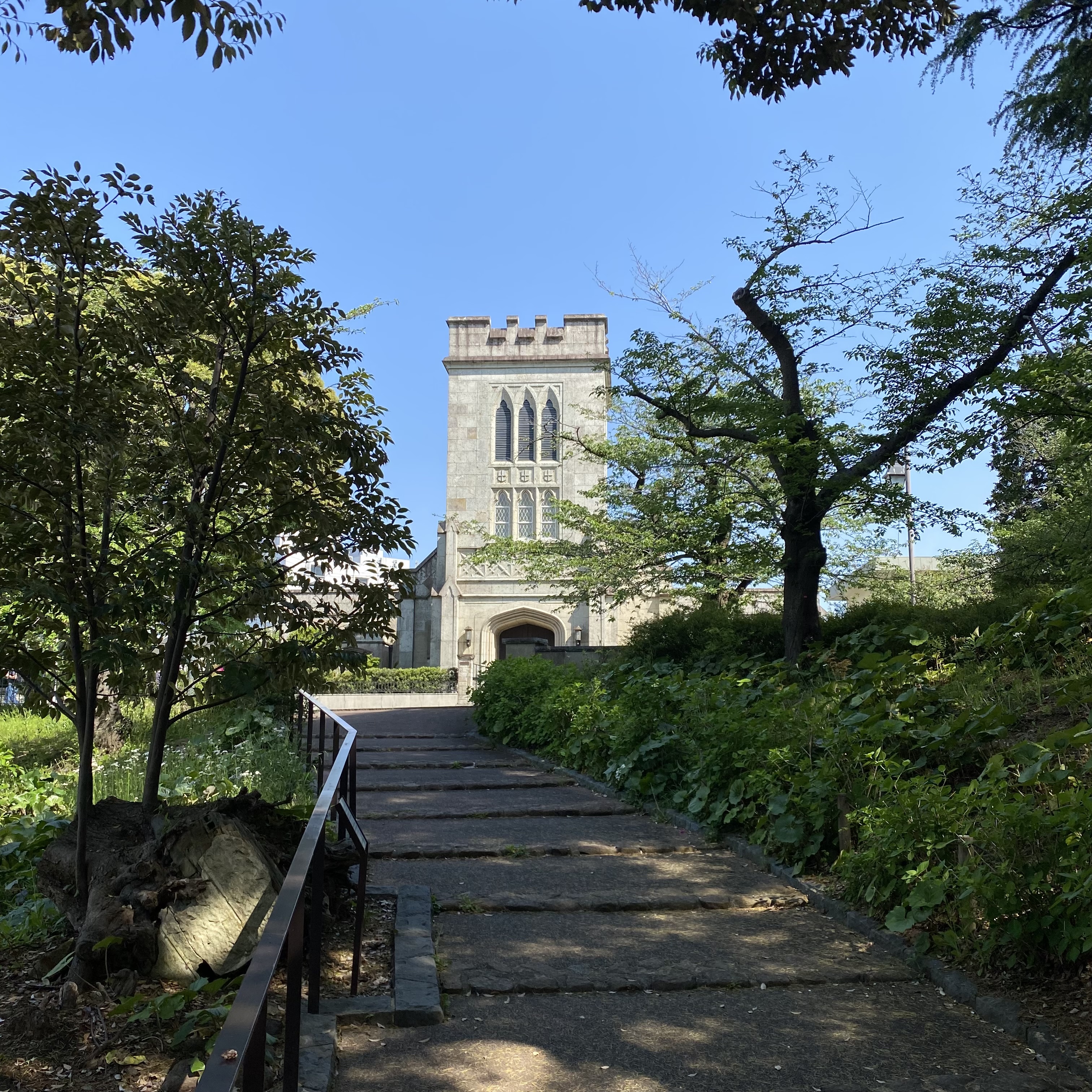
横浜のキリスト教会
🔴 Buddhism: Jizo are the guardian deities for children and travellers. They are properly called “Jizo Bosatsu”, originating in ancient India where in Sanskrit they are called Ksitigarbha , which means earth womb…..bet you didn’t know that….
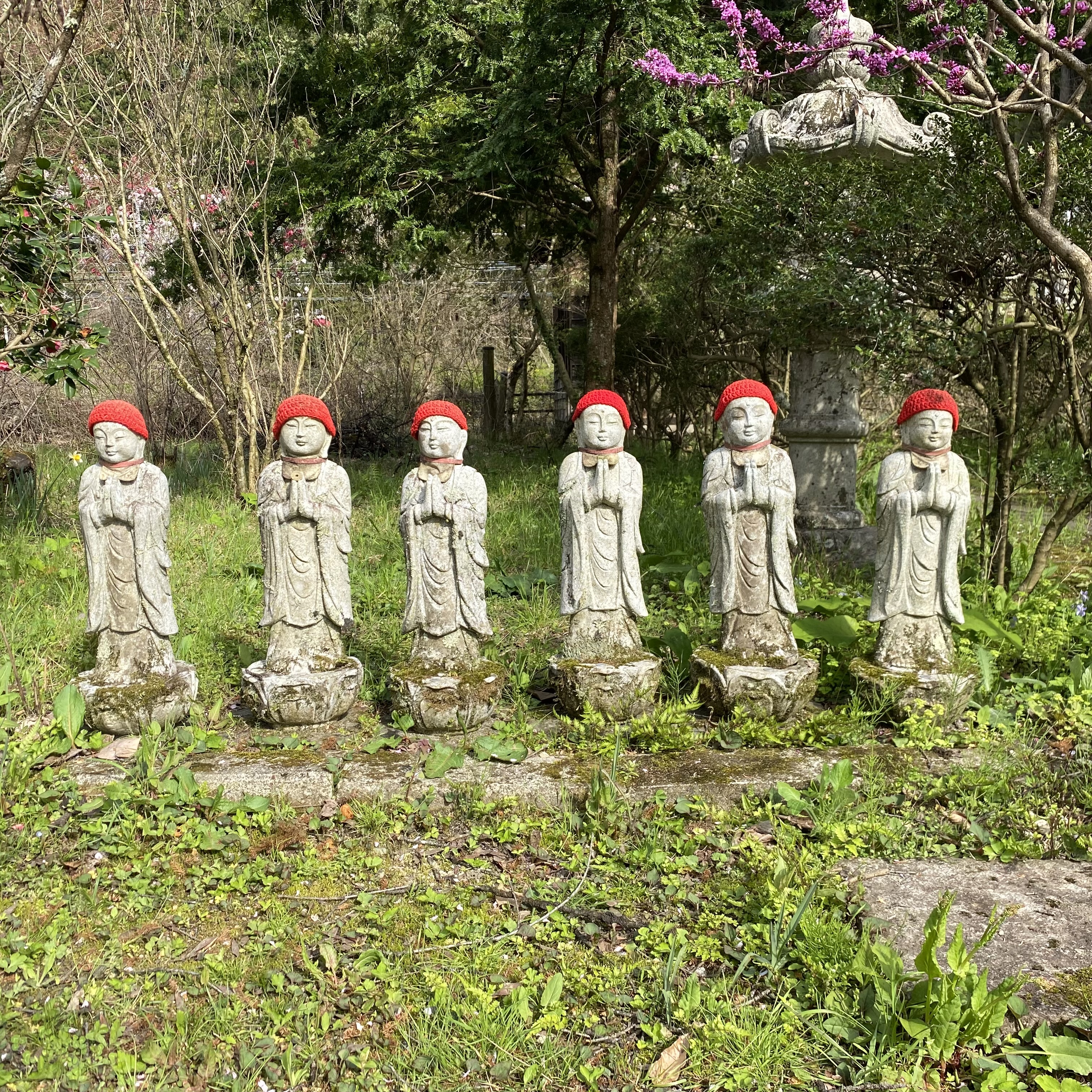
なぎそ 【南木曾】
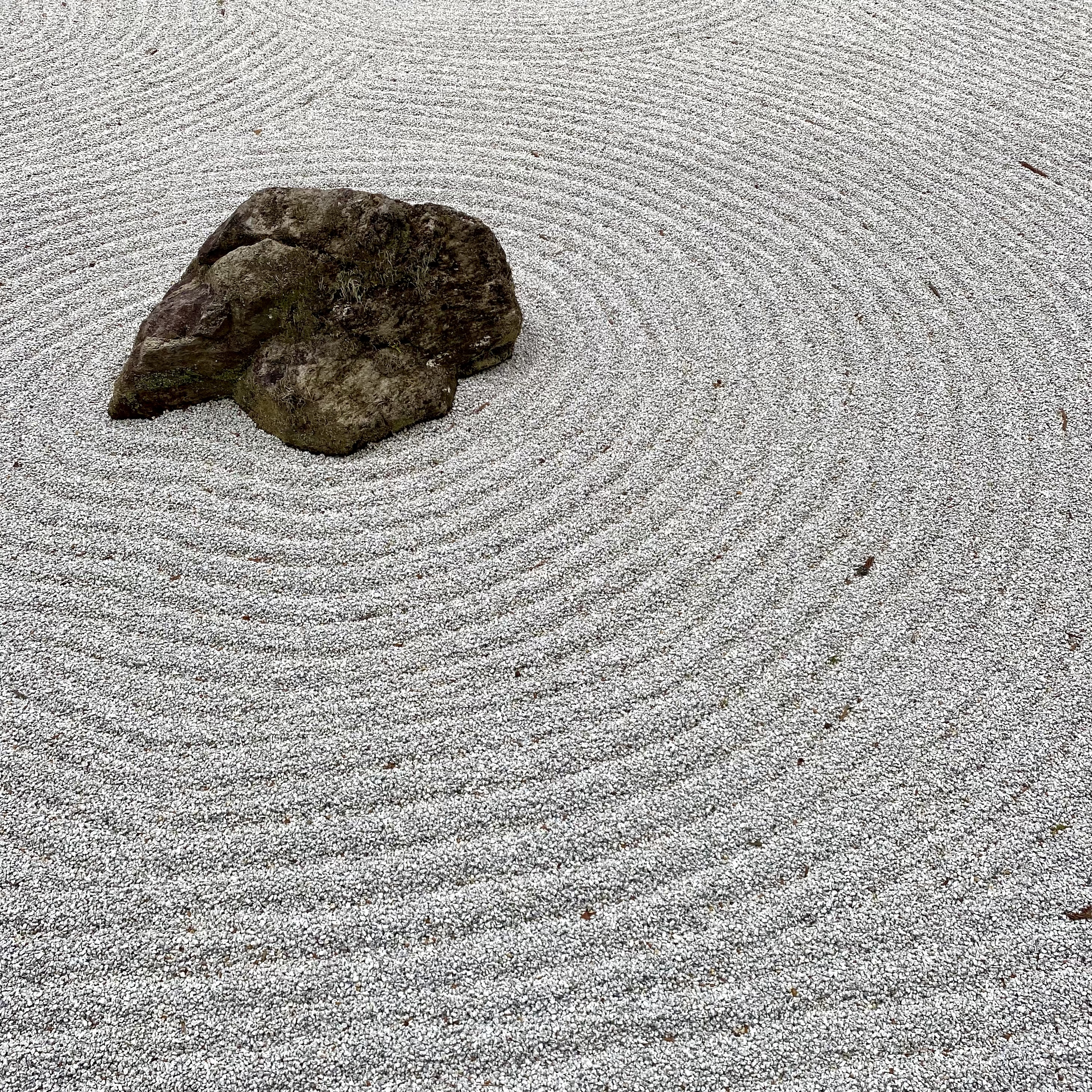
Buddhism has many interpretations and factions… here at the Rinnjo Buddhist temple in Sendai. A Zen stone garden.
“………..Religion in Japan is manifested primarily in Shinto and in Buddhism, the two main faiths, which Japanese people often practice simultaneously. According to estimates, as many as 70% of the populace follow Shinto rituals to some degree, worshiping ancestors and spirits at domestic altars and public shrines. An almost equally high number is reported as Buddhist…..” (Wiki)
「……日本の宗教は、主に神道と仏教という二つの主要な信仰に表れており、日本人はしばしばこの二つを同時に信仰しています。推計によると、国民の70%が何らかの形で神道の儀式に従い、家庭の神棚や公共の神社で祖霊や霊を祀っています。ほぼ同数の人々が仏教徒であると報告されています……」(Wikipedia)
🔴…a local Shinto shrine in Hodogaya…..
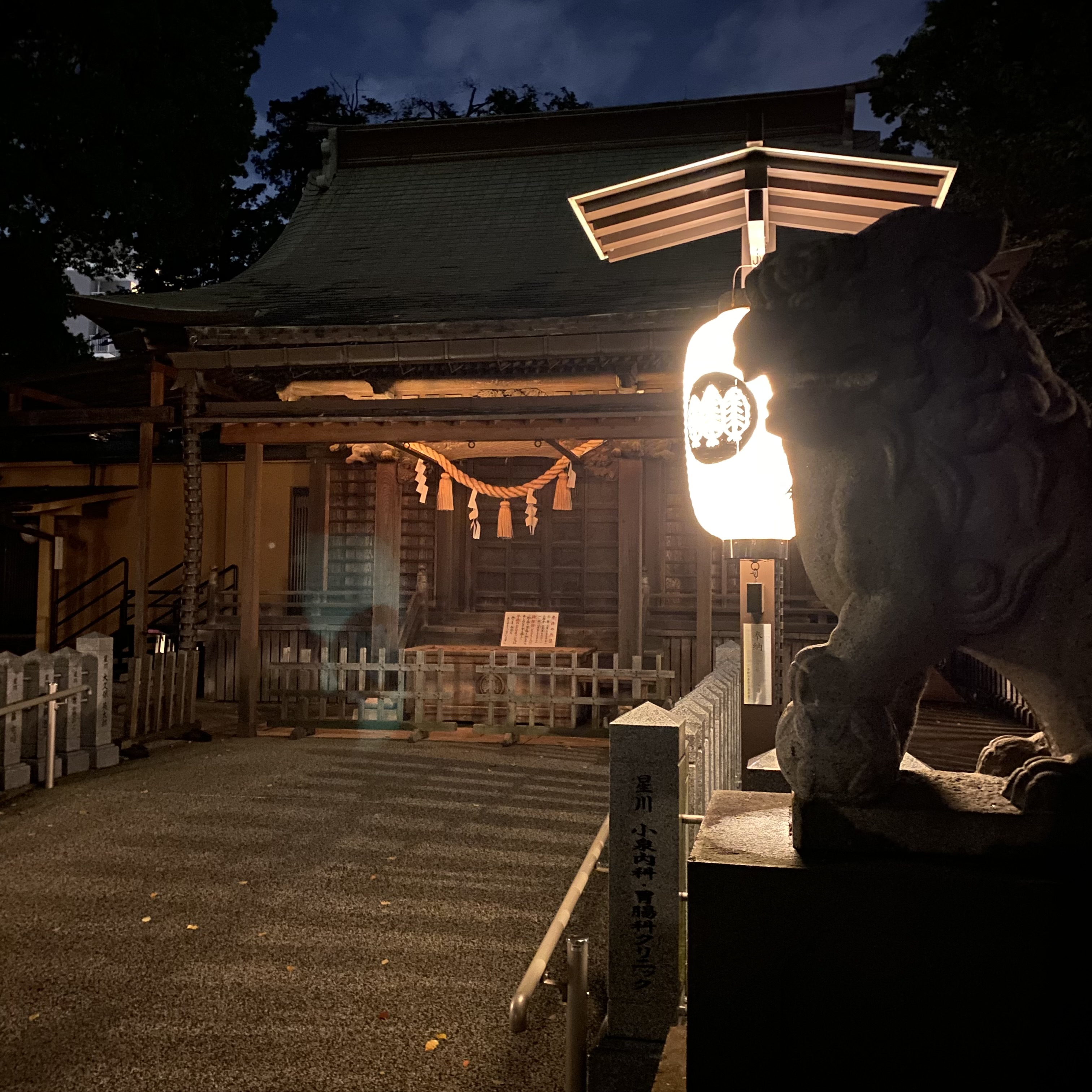
程ヶ谷宿
The entrance to the Aoba Shinto shrine in Sendai – tucked between the houses like a jewel in a nondescript urban landscape…..
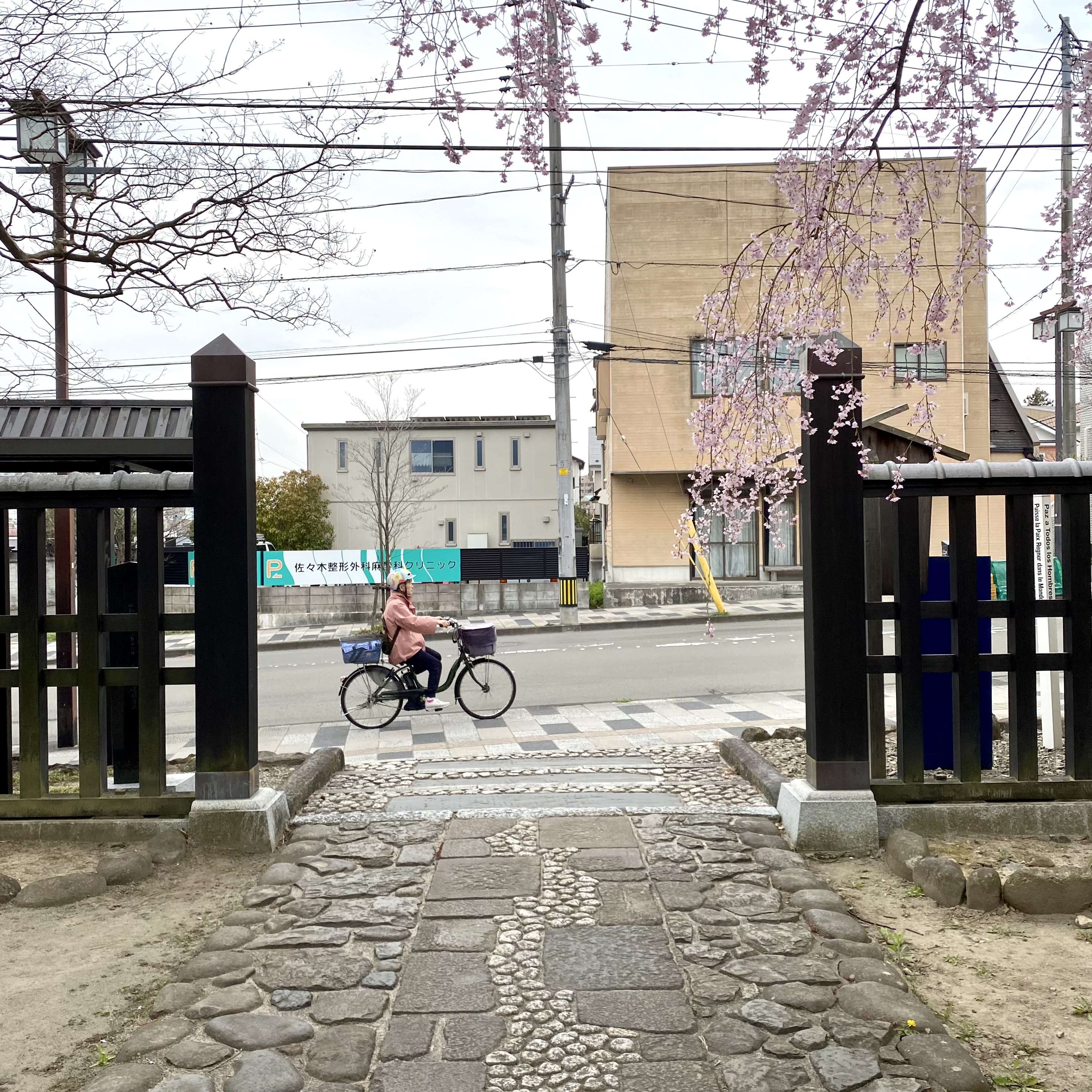
仙台の青葉神社
🔴 Fuji-san 🗻 is certainly regarded as sacred. I go for a walk behind my house and there it is on the horizon. But the iphone camera with its wide angle lens does not do it justice. On another day I catch a surprising glimpse of it from the carpark.
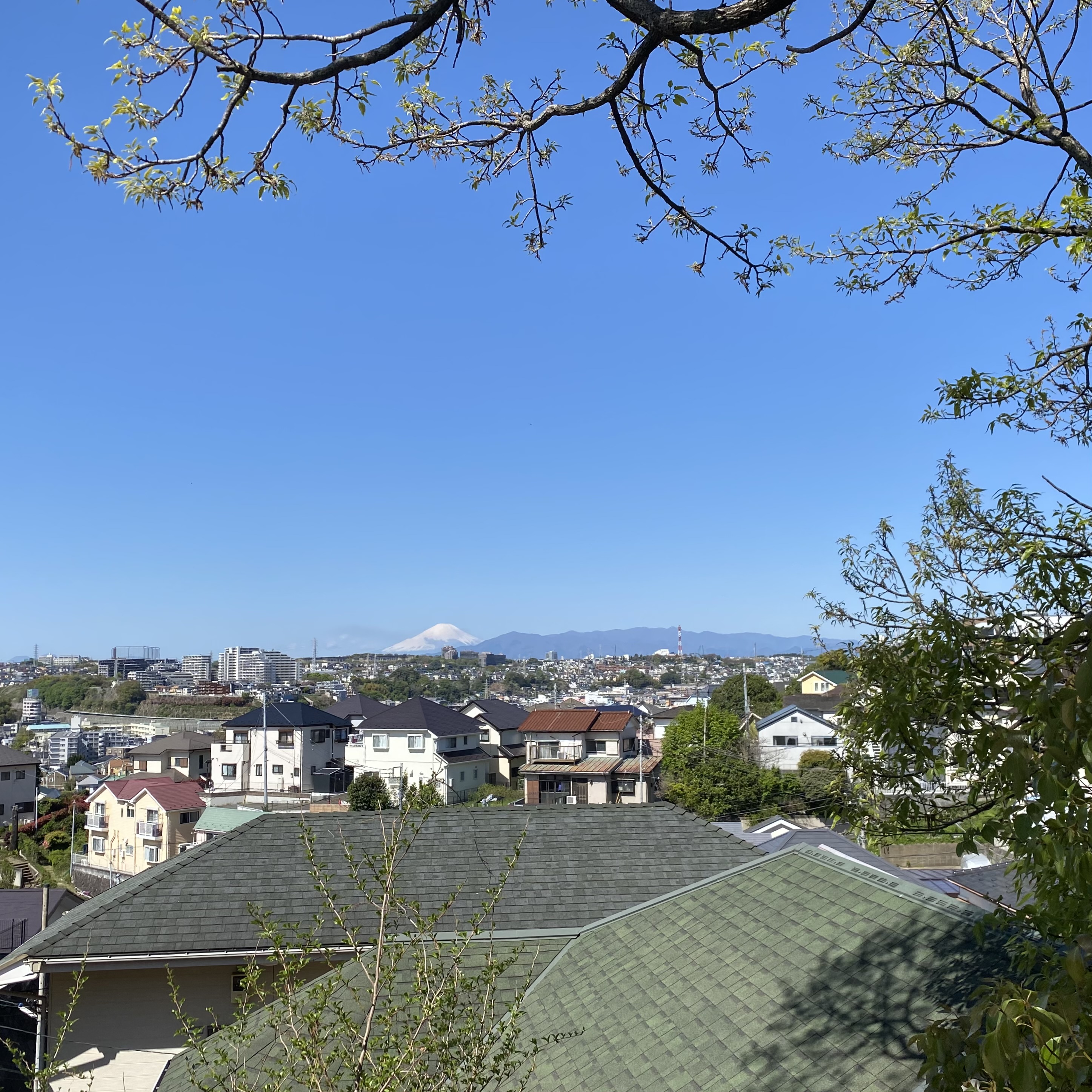
富士山
It is so much bigger than anything else on the landscape, appearing like the backdrop to a stage. It is an awe-inspiring sight. And then it disappears again. Like some magnificent but fickle god.
🔴 I’ve been recording these manholes for a palaeographer at Göttingen University. However they are hardly phD material. They are what is called fun…..not often seen in the corridors of town councils…
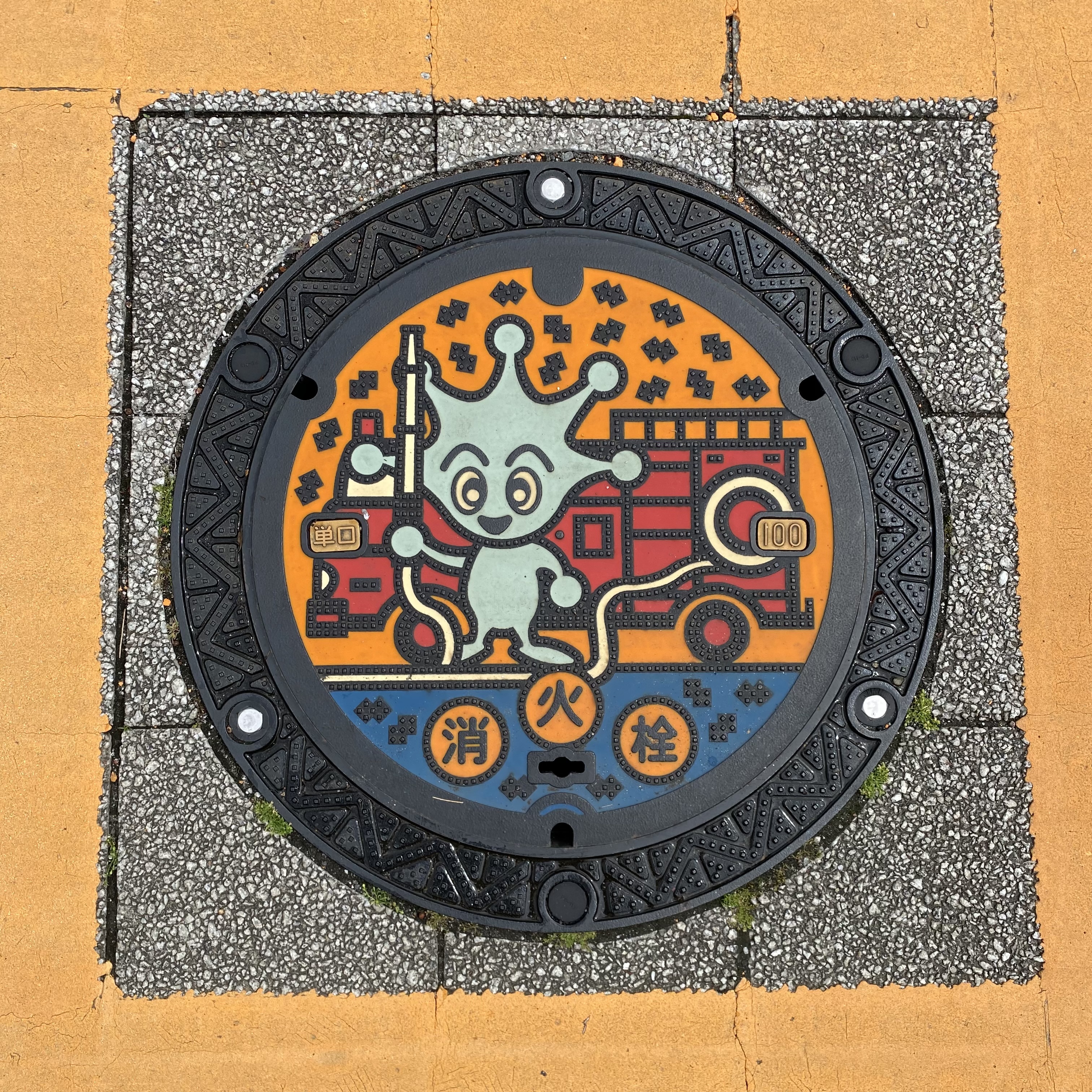
Japan’s history is one of wooden buildings – 🪵 So it’s no surprise that fire-fighting has a long history. And how typical to use a cartoon-like figure to convey an important message. A nice thing to have in the pavement! (it’s a fire hydrant). I must suggest this to the Langen Bürgermeister……
🔴 And technology. Pride in the old…Another view of that pre-Dreadnought battleship Mikasa…
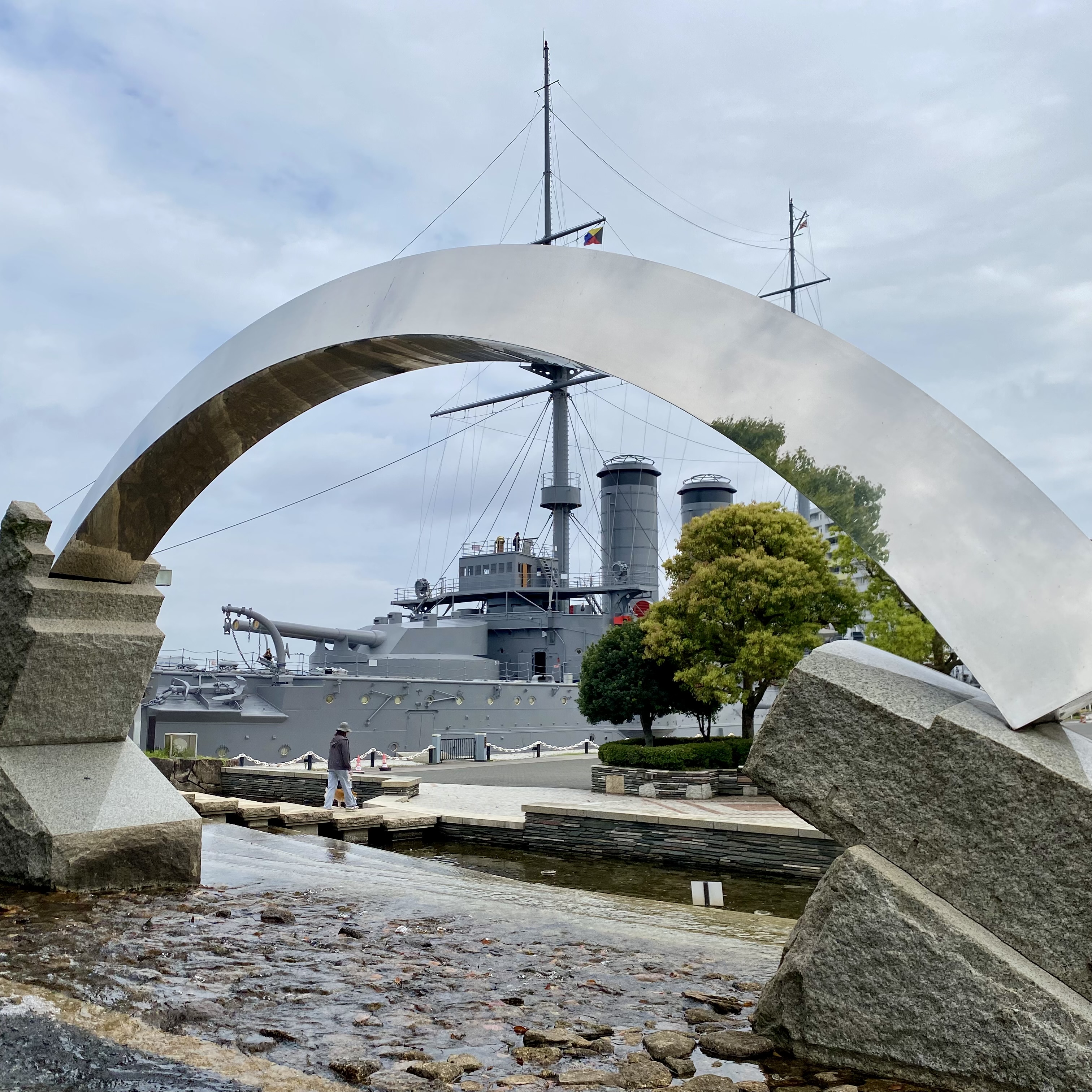
三笠 (戦艦)
and in the new….the monorail in Tachikawa, Saitama.
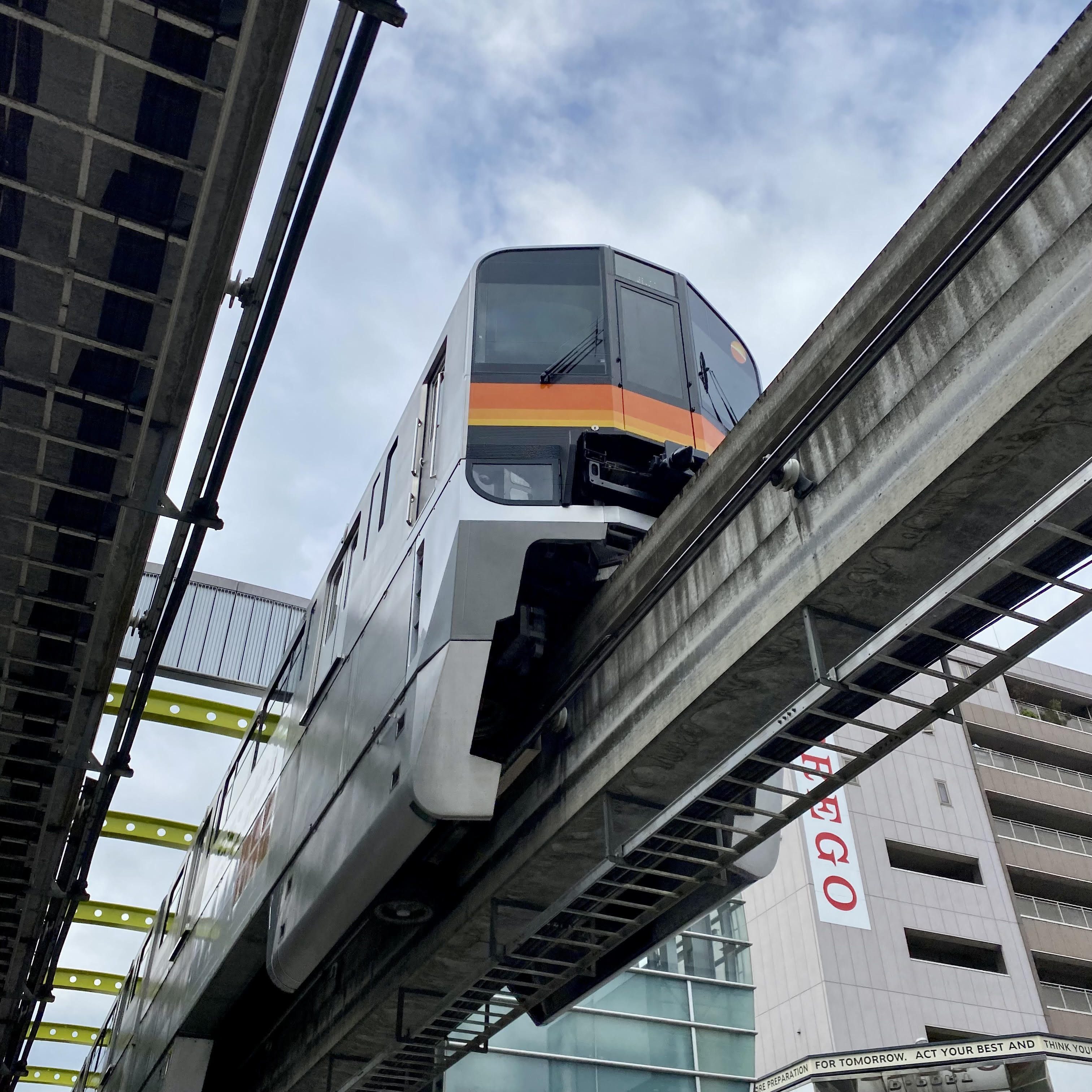
立川市 モノレール
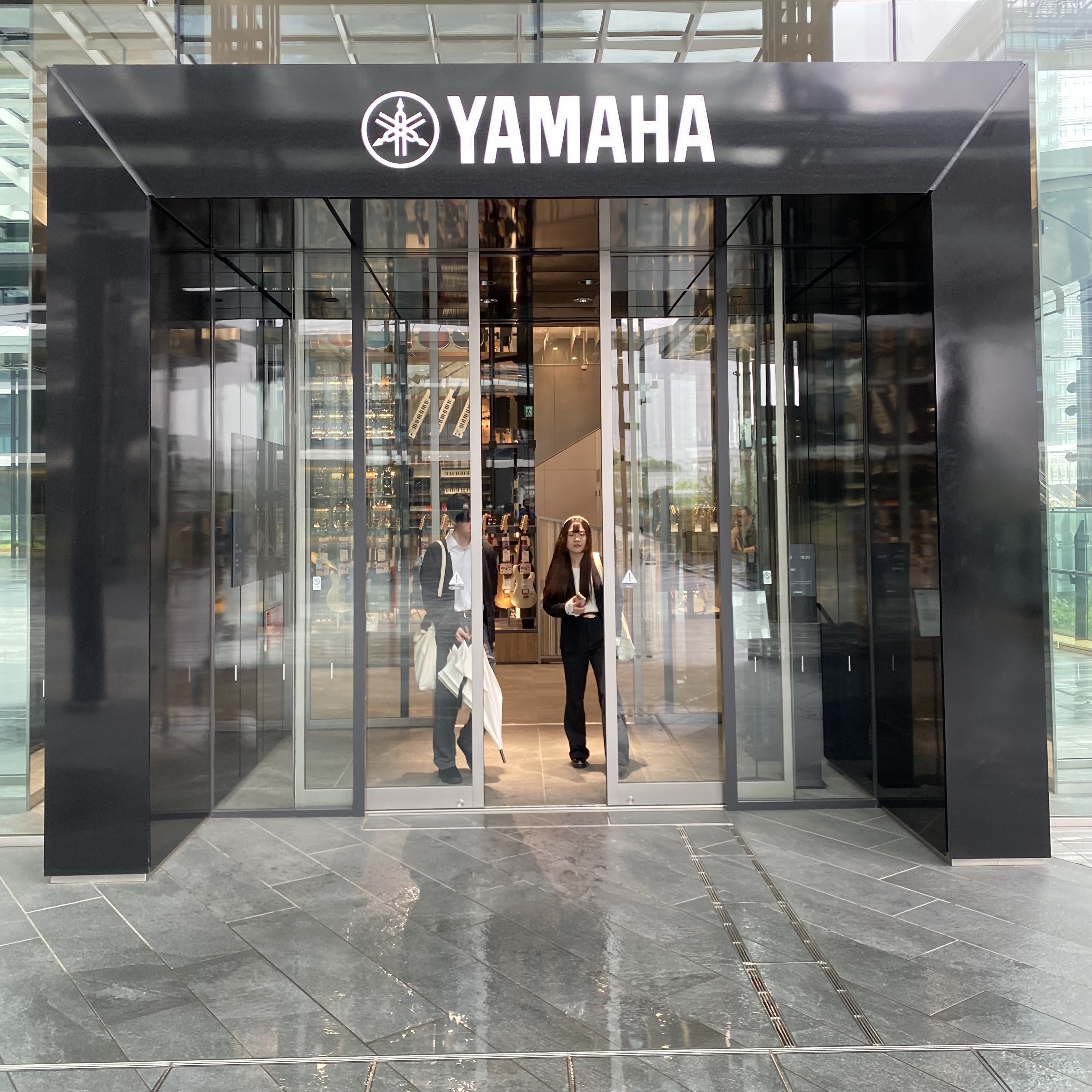
Yamaha Music Store, Yokohama. Sound experiences……🎵

A synthesis of philosophy, art and sport: Archery 🏹.
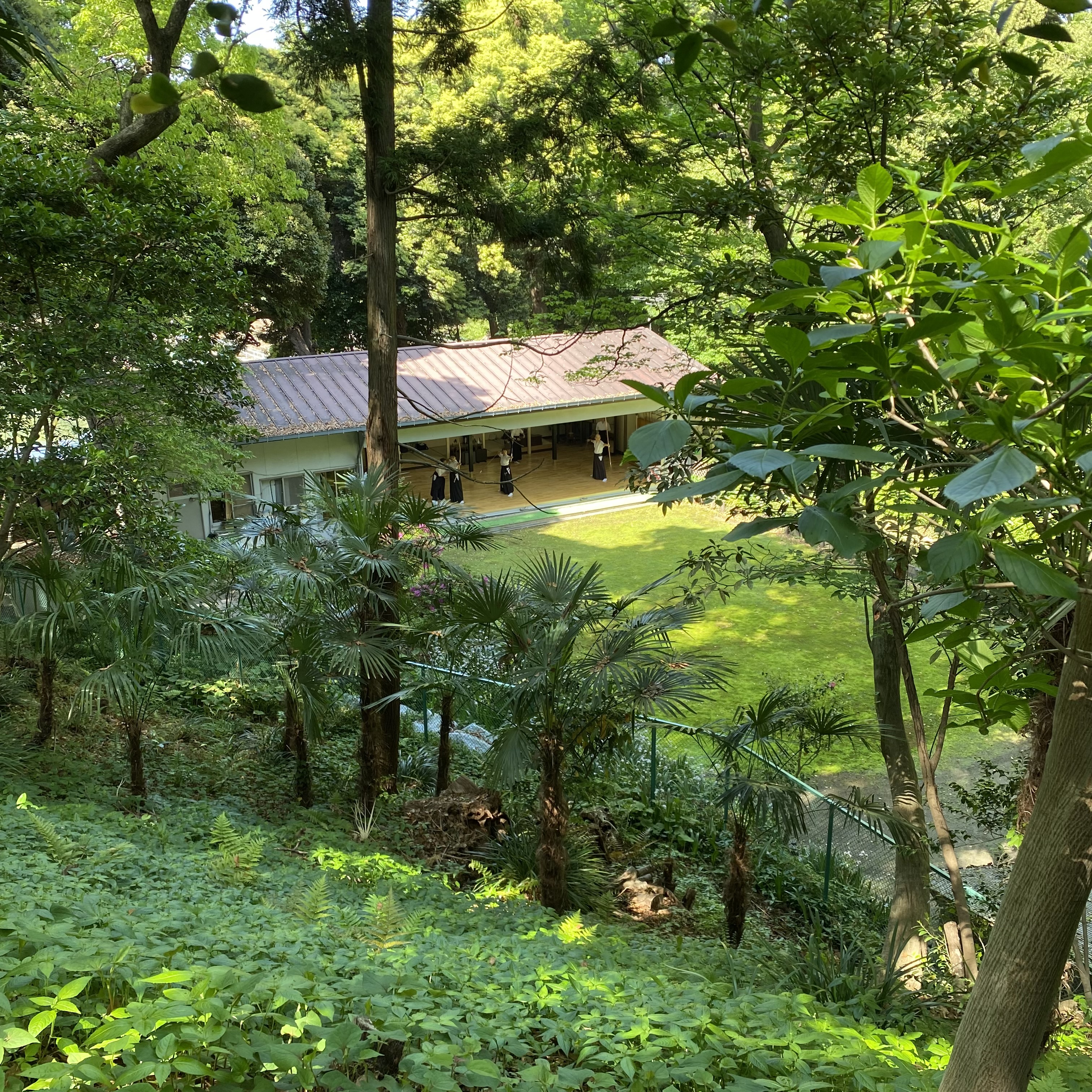
弓
🔴 The tilting vessel: an illustration of one of Confucius’s principles where a bucket is suspended from two chains and needs to be filled with exactly 80% of its capacity in water to come to perfect balance — this is where the Japanese expression “hara hachibu” or “eat until you’re 80% full” comes from……..I took this picture at Ashikaga Gakko in Tochigi – Japan’s oldest university, which was founded in 832 using a Confucian syllabus.
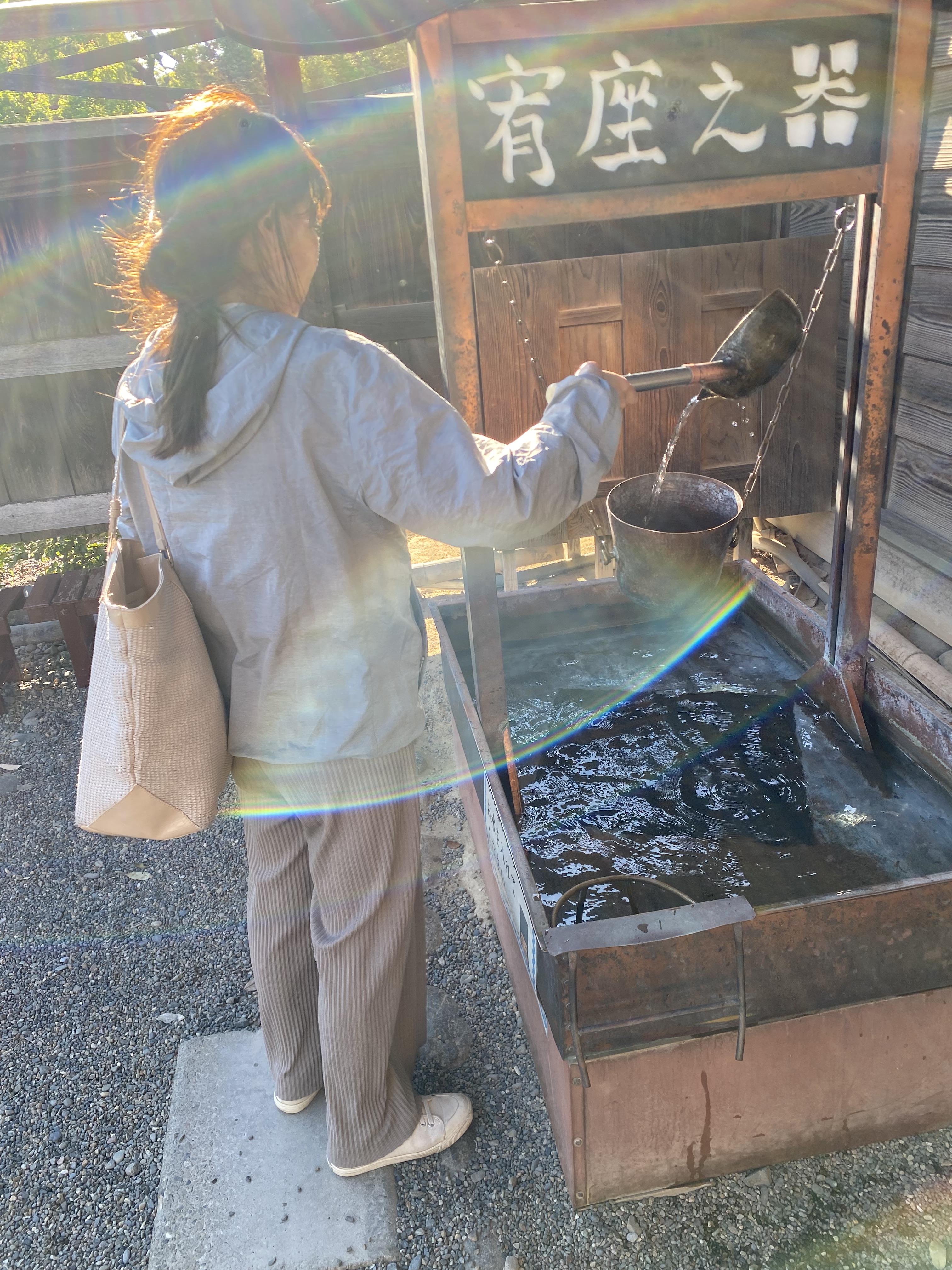
Ashikaga Gakko 傾く器:孔子の原則の一つを示す例 . 友子さんありがとう。
That’s it from Japan. I hope you have enjoyed reading these blogs.
As always, thank you for your interest, and if you know anyone who might be interested in this blog then do send it on.
Das war’s aus Japan. Ich hoffe, euch hat das Lesen dieser Blogs gefallen.
Wie immer vielen Dank für euer Interesse. Wenn ihr jemanden kennt, der an diesem Blog interessiert sein könnte, schickt ihn gerne weiter.
読んでくれてありがとう
See you……. matane!
Nigel 🖋️
nigelwruddock@gmail.com.
*
 The View from the Towers 塔からの眺め
Leave a comment